

Expertise


From the early pioneers on the Snowy Mountains Hydroelectric Scheme, to our leaders and innovators of today, our people make us who we are.
Through our network of global specialists and by collaborating with local partners, we connect you with the best teams and capabilities to deliver highly innovative and sustainable solutions.
As an organisation we are continually evaluating ways we can better provide a safe, flexible, inclusive and respectful workplace for our people and clients.
People are at the heart of our organisation, we strive to create a flexible, diverse and inclusive environment that enables our people to thrive to their fullest potential.
Explore career opportunities
Geopolitical tensions, economic volatility, climate risk, changing investment priorities and rapid advances in technology are reshaping the assumptions on which long-term infrastructure decisions have traditionally been made.
Yet infrastructure cannot depend on certainty before decisions are made.
The assets and systems being planned today will shape economies, communities and the environment for decades to come. The challenge for infrastructure leaders, therefore, is not to predict the future with absolute confidence, but to make decisions today that remain useful and valuable when conditions inevitably change.
This is increasingly at the centre of the global infrastructure conversation.
This was a central theme of the FIDIC Global Infrastructure Conference in 2025, where discussions on global leadership explored how the infrastructure sector should respond to geopolitical and economic uncertainty, while continuing to support stability, growth and sustainability.

Infrastructure is often viewed through the lens of assets, capital programmes and investment pipelines. But infrastructure is ultimately about outcomes.
A transport network creates access to jobs, markets, education and opportunity. Reliable energy allows businesses, industries and public services to function. Water and sanitation infrastructure protects health, dignity and quality of life. Digital infrastructure increasingly underpins economic participation, productivity and access to services.
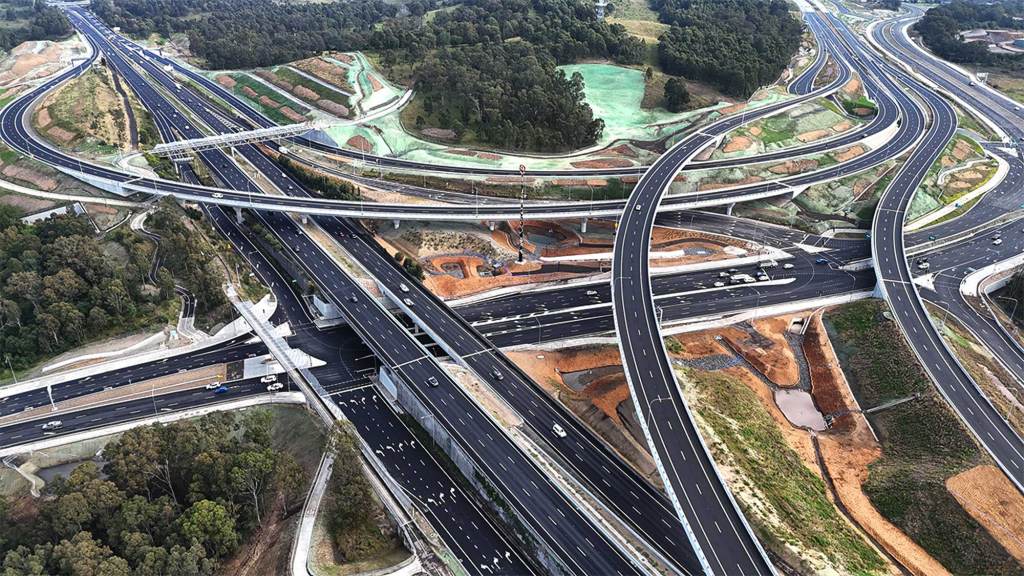 M7-M12 Integration Project, Australia
The project itself is not the final outcome. It is a means of enabling stronger economies, healthier communities and more connected and resilient societies. This is important because the scale of infrastructure investment ahead is substantial.
PwC’s Global Infrastructure Outlook 2025-50, developed with Oxford Economics, forecasts cumulative global infrastructure spending at approximately US$151.1 trillion over the next 25 years, with annual spending rising from US$4.4 trillion in 2024 to US$6.9 trillion by 2050.
Transport and power are expected to account for around half of that investment, while infrastructure itself is evolving beyond traditional standalone assets towards increasingly connected digital, environmental, industrial and social systems.
At this scale, what matters is not simply whether the world will invest in infrastructure, but whether we make the right investment decisions and embed resilience into the way infrastructure is planned and designed, enabling it to continue delivering value as the world around it changes.
One of the hardest realities of infrastructure leadership is that major decisions often have to be made with the best information available at the time.
Consider an asset with a design life of 50 years. We may understand the need it must address today. However, we cannot know with certainty where populations will concentrate several decades from now, how cities will evolve, what technologies will become mainstream, how climate conditions will change or how patterns of work, mobility and energy consumption will shift.
That does not mean the decision should be postponed. It means making the best decision possible while recognising that some of today’s assumptions will change.
Waiting for perfect certainty is not a viable infrastructure strategy. The social and economic cost of inaction can be just as significant as the risk of making an imperfect decision.

Effective leadership therefore requires us to ask better questions. What are we ultimately trying to achieve? Which decisions are difficult or expensive to reverse? Where can we preserve flexibility? What assumptions are we making and what happens if they change? Perhaps most importantly, are we designing something that solves today’s problem while unintentionally constraining tomorrow’s choices?
Traditional infrastructure planning has often worked towards an assumed or ‘most likely’ future. In an increasingly uncertain environment, that approach is no longer enough. We need to think in terms of multiple plausible futures and the external factors that may shape them, considering how an investment might perform under different conditions. That requires adaptability and optionality.
We should avoid unnecessarily locking infrastructure into a single future configuration where there is value in prioritising flexibility. A road corridor may need to accommodate future mobility technologies. An energy system may need to absorb new generation sources and different demand patterns. Urban infrastructure may need to respond to changing population densities. Water systems may need to operate under climate conditions that differ materially from those on which their original design assumptions were based.
Flexibility does not mean designing for every imaginable future. That would be neither affordable nor practical. It means understanding where flexibility has value and making deliberate choices about where to preserve it.
The tools available to infrastructure leaders are also significantly more sophisticated than they were even five to ten years ago. Scenario planning, lifecycle analysis, improved data, digital engineering and increasingly advanced modelling allow us to test choices, visualise potential outcomes and better understand the consequences of different decisions before infrastructure is built.
These tools don’t eliminate uncertainty, but they improve our ability to make decisions within it. They also help us move beyond thinking about individual projects in isolation.
Infrastructure operates as part of a wider system. Transport interacts with land use and economic development. Energy infrastructure influences industry and digital connectivity. Water, environmental systems and urban development are interconnected. Changes or disruption in one part of the system can have consequences elsewhere.
This systems perspective is increasingly reflected in global thinking on infrastructure resilience, with greater emphasis on risk-informed planning, better information, stronger governance and the performance of interconnected infrastructure systems (World Bank, 2025).
The leadership question therefore becomes broader: not simply, will this project perform, but how will this investment strengthen the performance, resilience and adaptability of the wider system of which it forms part?
Our response to uncertainty cannot be separated from the sustainability challenge. Infrastructure has long lifecycles, meaning decisions made today can shape environmental, economic and social outcomes for decades.
For leaders, sustainability and resilience should therefore not be treated as separate objectives or additional considerations. They are fundamental to how long-term infrastructure value is defined.
Designing for resilience means considering environmental, social and economic outcomes together – reducing carbon and improving resource efficiency, while supporting more inclusive development and creating lasting value for communities. This is increasingly central to the long-term performance of infrastructure. Infrastructure must be able to withstand disruption, adapt to changing conditions and continue to deliver value over time.
The Infrastructure Sustainability Council’s IS Rating Scheme reflects this broader view, assessing infrastructure across environmental, social, economic and governance dimensions throughout the asset lifecycle, from planning and design through to construction and operations (ISC, 2026).
Regenerative design takes this thinking a step further. Rather than focusing only on reducing negative impacts, it asks how infrastructure can create net-positive outcomes – restoring and enriching environmental and social systems and creating benefits across climate and carbon, people and communities, nature and biodiversity. This requires a more integrated view of infrastructure, recognising the interdependence of natural, human and built systems and looking beyond the boundaries of an individual project to the wider system in which it operates.
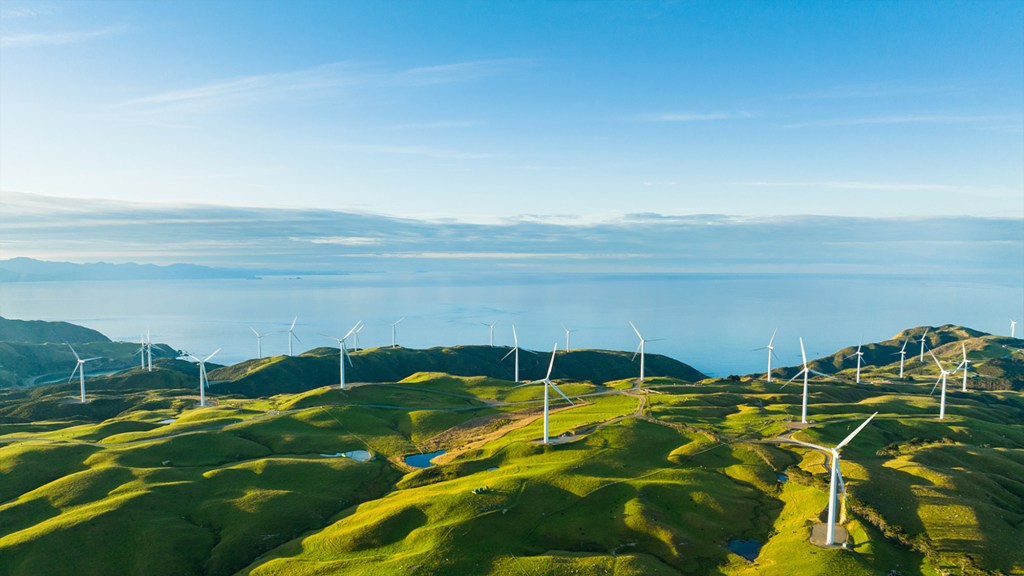
As FIDIC has emphasised, resilience, sustainability and quality are increasingly central to the industry’s response to a changing global environment and need to be considered together.
For leaders, this means looking beyond the immediate requirement and considering how infrastructure will perform over the life of the asset, as well as the wider impact it will have. The decisions that create lasting value are those that remain fit for purpose as the world around them changes.
The scale and complexity of the infrastructure challenge means no single organisation, profession or institution can solve it alone.
Governments establish policy and investment priorities. Investors and financial institutions influence what can be funded. Engineers and technical advisors translate needs into viable solutions. Contractors bring delivery knowledge. Technology providers create new capabilities. Communities bring knowledge of local realities and are ultimately important to the ownership and stewardship of the infrastructure created. Each brings different expertise, priorities and perspectives. Leadership increasingly lies in creating the conditions in which those perspectives can contribute to better decisions.
For global engineering organisations, one of the greatest opportunities lies in combining global expertise with local knowledge. Global experience and specialist expertise can strengthen local delivery, while collaboration with local communities ensures solutions are informed by local conditions, needs and experience. In doing so, global expertise is not only shared, it also helps to build and strengthen local capability.

That exchange works both ways. Lessons developed in one market can inform another, while local knowledge can challenge assumptions and strengthen global practice. In doing so, we not only improve individual projects but build capability within the wider industry.
This becomes increasingly important as the challenges facing infrastructure become more interconnected and global. Climate change is inherently cross-border: emissions and their consequences are not contained within national boundaries. Supply-chain shocks, technological disruption, decarbonisation pressures and economic forces are similarly global in their impact on infrastructure investment.
Our response therefore requires a systems thinking approach, recognising the need for collaboration across organisations, disciplines, sectors and geographies. It also requires leadership that can create confidence in an environment where certainty may simply not exist.
When assumptions are changing and risks are difficult to quantify, decision-making becomes more complex. Leadership cannot remove every unknown, but it can provide clarity – clarity about the outcomes being pursued, the information available, the assumptions being made, the risks being accepted and where flexibility needs to be retained.
That clarity creates confidence. Not because every risk has been resolved, but because there is a clear basis for making decisions and adapting them as circumstances change.
FIDIC plays an important role in creating the space for this kind of leadership. As a global voice for consulting engineering and infrastructure, FIDIC brings together leaders from different markets and parts of the infrastructure ecosystem to engage with challenges that cannot be addressed in isolation.
These global conversations span issues including climate change and decarbonisation, AI, the future-proofing of engineering and the changing demands placed on the infrastructure sector.
The ability to learn from one another, challenge conventional approaches and develop solutions collectively will be critical to navigating an increasingly uncertain infrastructure landscape.
A lack of certainty should not mean infrastructure investment stands still. It reinforces the need to make better, more deliberate and more adaptable decisions.
Infrastructure leaders will need to balance immediate pressures with long-term purpose, make sustainability integral to decision-making and build partnerships capable of responding to challenges that cross organisational and national boundaries.
For the infrastructure sector, this means rethinking how infrastructure is planned, designed, delivered and managed. It means connecting investment with economic growth, sustainability and community outcomes, while using innovation and integrated thinking to create infrastructure that can respond to changing needs and conditions.
Infrastructure can do more than respond to change – it can help shape it.
References
FIDIC (2025). FIDIC Global Infrastructure Conference 2025 – Smart Infrastructure: Equality, Resilience and Innovation for a Sustainable World. FIDIC Global Infrastructure Conference 2025
PwC and Oxford Economics (2026). Global Infrastructure Outlook 2025–50: Investing in Infrastructure, the Platform for Accelerating Human Progress. PwC Global Infrastructure Outlook 2025–50
Infrastructure Sustainability Council (2026). IS Rating Scheme. Infrastructure Sustainability Council
FIDIC (2026). FIDIC 2026+ Strategy. International Federation of Consulting Engineers. FIDIC 2026+ Strategy
World Bank and Global Facility for Disaster Reduction and Recovery (GFDRR) (2025). Annual Report 2025: Bringing Resilience to Scale. World Bank – GFDRR Annual Report 2025
Miller, R. and SMEC (2025). Regenerative Design: Why Now? SMEC – Regenerative Design: Why Now?
Over the past four decades, sustainability has increasingly become embedded in how infrastructure is designed and delivered. Engineers have driven significant advances in efficiency, resilience, and climate.
Urbanisation, population growth, climate change, and technological disruption are converging to create unprecedented challenges and opportunities in the Transport sector.
The integration of community engagement and social value considerations in transport planning leads to more holistic and effective solutions, creating a future where transport networks are not only environmentally sustainable but also enhance the well-being of our communities.
Transport mega-projects are reshaping the future of urban mobility, driving innovations that enhance connectivity, support communities, and enable economic growth and sustainability. Through cutting-edge technology and large-scale infrastructure, these projects are transforming cities by reducing congestion, improving environmental outcomes and facilitating seamless travel.