
Expertise


From the early pioneers on the Snowy Mountains Hydroelectric Scheme, to our leaders and innovators of today, our people make us who we are.
Through our network of global specialists and by collaborating with local partners, we connect you with the best teams and capabilities to deliver highly innovative and sustainable solutions.
As an organisation we are continually evaluating ways we can better provide a safe, flexible, inclusive and respectful workplace for our people and clients.
People are at the heart of our organisation, we strive to create a flexible, diverse and inclusive environment that enables our people to thrive to their fullest potential.
Explore career opportunities
Unbound granular materials make up the bulk of a pavement structure and are classified based on their strength and stiffness. The CBR, which assesses the load-bearing capacity, is typically used for this. Standard construction quality assurance (QA) in Southern Africa does not test for strength or stiffness; thus, a gap exists between the design and QA for granular materials.
The LWD determines the resilient modulus based on the amount of settlement recorded from a known weight being dropped from a known height. Modulus testing equipment, such as the LWD, has been around for over a decade, and multiple countries have standards for using it as a quality control tool, but adoption of the LWD in Southern Africa has been slower.
Through field and laboratory testing, this study attempted to find a correlation between the resilient modulus and the CBR. Field testing consisted of LWD testing on a freeway construction site near Windhoek, Namibia, which was correlated with soaked CBR data. Using an LWD with a 300 mm load plate and a 15 kg drop weight, test results of eight lots with different material classes were correlated with the obtained CBR results. A logarithmic correlation with an R2 value of 0.67 was found.
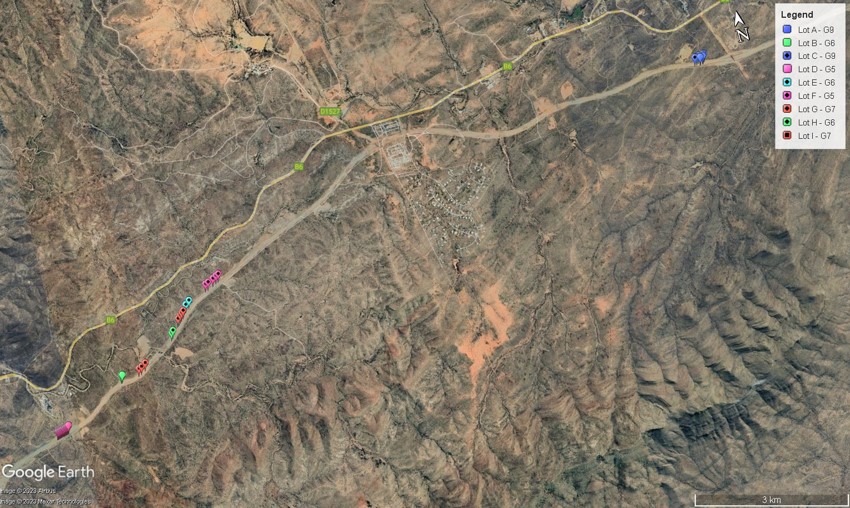
This relationship was further refined in a laboratory setting on a G6 material. Material property tests such as the Sieve Analysis, Maximum Dry Density (MDD) and Optimum Moisture Content (OMC) were performed to classify and understand the material. A vibratory hammer and a ModAASHTO hammer were used to determine the MDD and OMC, and the results were compared.
To accommodate the standard load plate size of the LWD, a 440 mm Ø * 500 mm high mould was constructed in which the material was compacted. The material was sieved into four different fractions, which were kept constant for all testing. Four different degrees of compactions and different moisture contents were considered for this study. The material in the big mould was compacted with a jackhammer equipped with a tamper plate. To ensure uniform compaction throughout the total depth of the sample, the material was compacted in nine layers, each 50mm high.
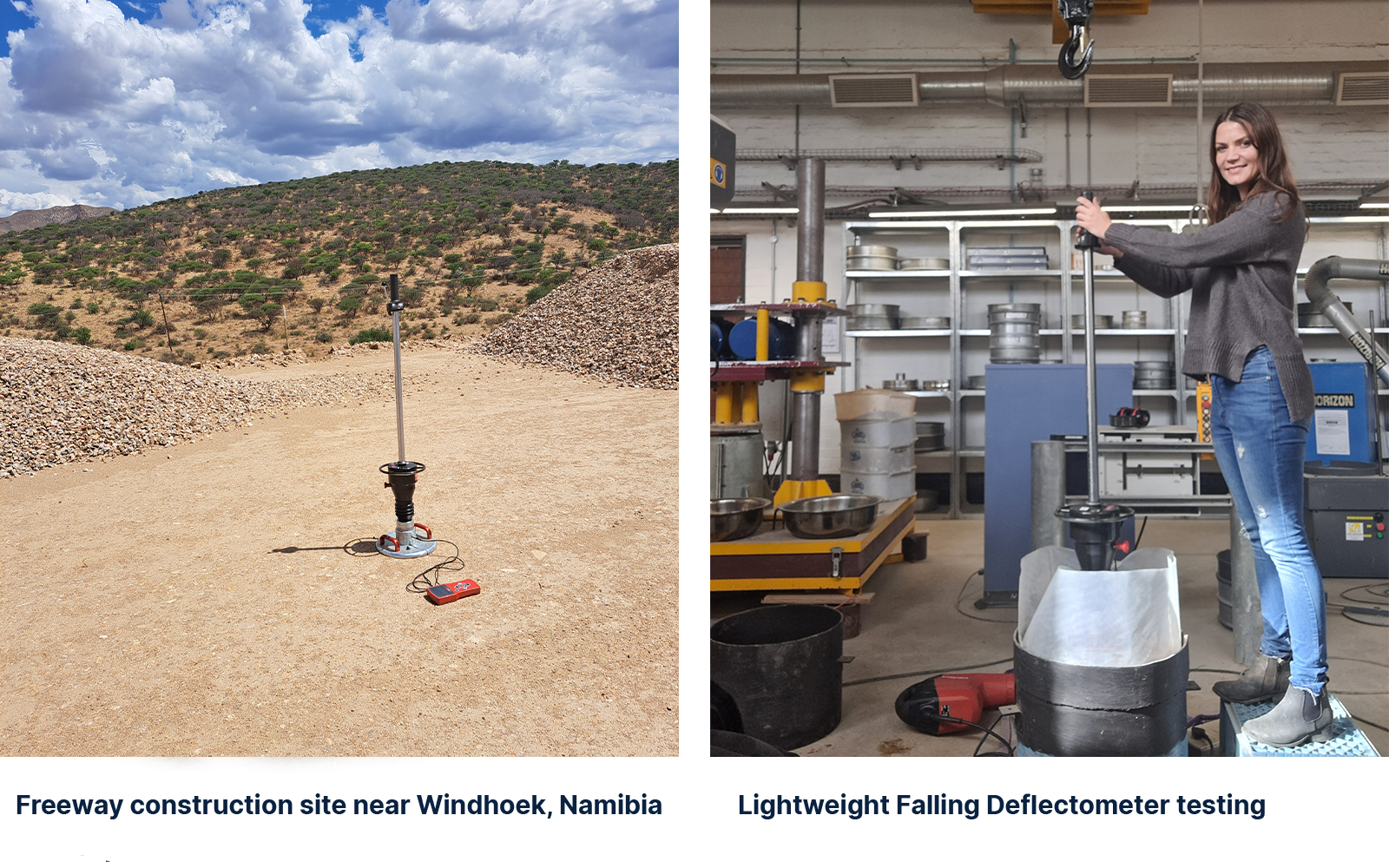
LWD tests were done on the compacted sample directly after compaction, as well as up to five days after compaction. This allowed for the observation of the trend in the LWDs resilient modulus (Evd), which is associated with the dry back of the uppermost layer of the sample. Four LWD tests were done each day, rotating the plate 90° between each test, which allowed us to assess the repeatability of the LWD. It was found that, on average, the Evd increased 179% between the first day and the fourth day of testing. The LWD tests done on the same day were highly repeatable, with a maximum variance of 10% between consecutive tests.
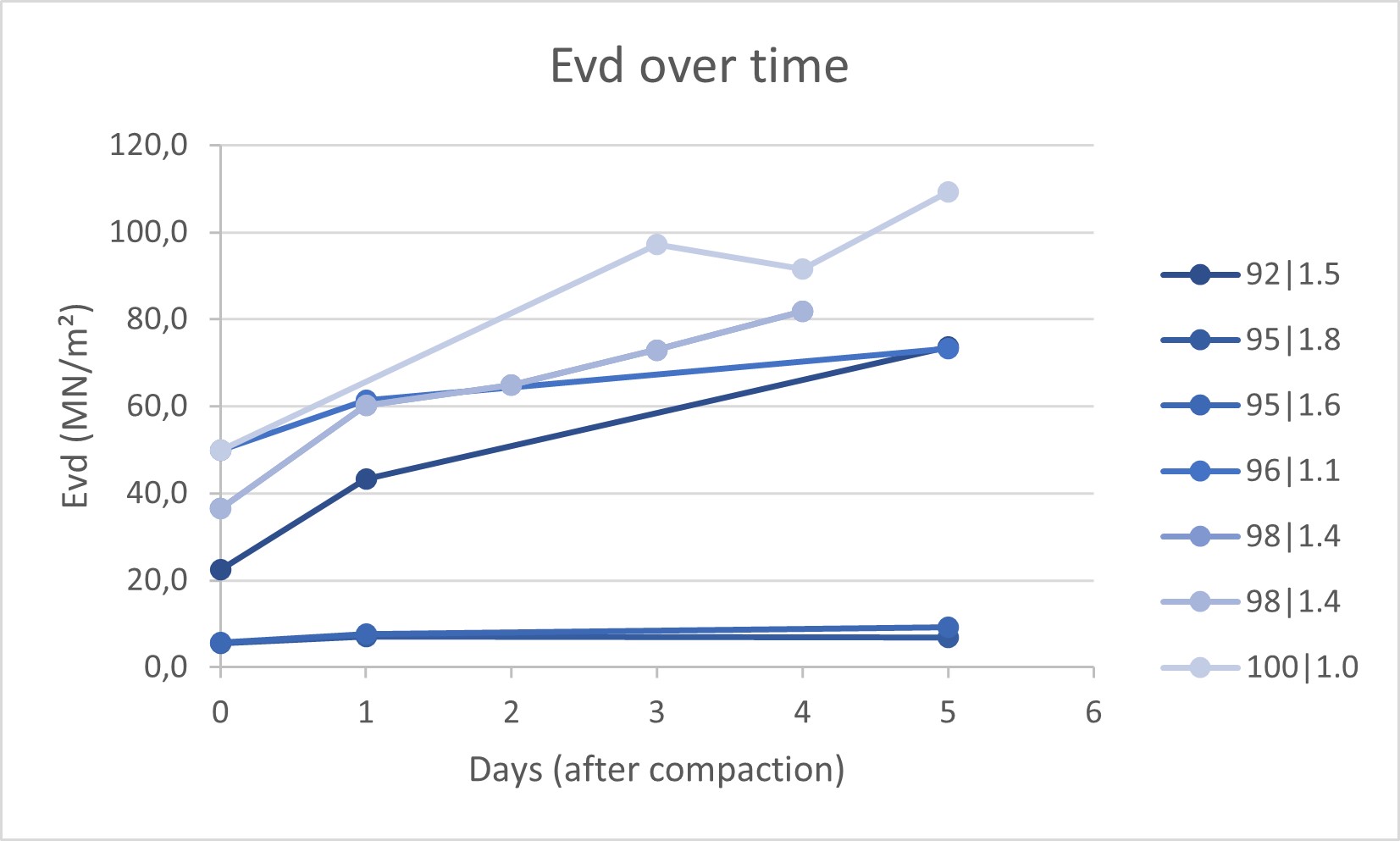
The influence of moisture content and degree of compaction on Evd measurements was also investigated by varying these two parameters. The LWD measurement was found to be slightly more susceptible to moisture than to the degree of compaction. This and the observation of the increase in the Evd associated with the dry back indicate that a moisture limit should be added to LWD testing and that testing should be done in a specified amount of time after construction.
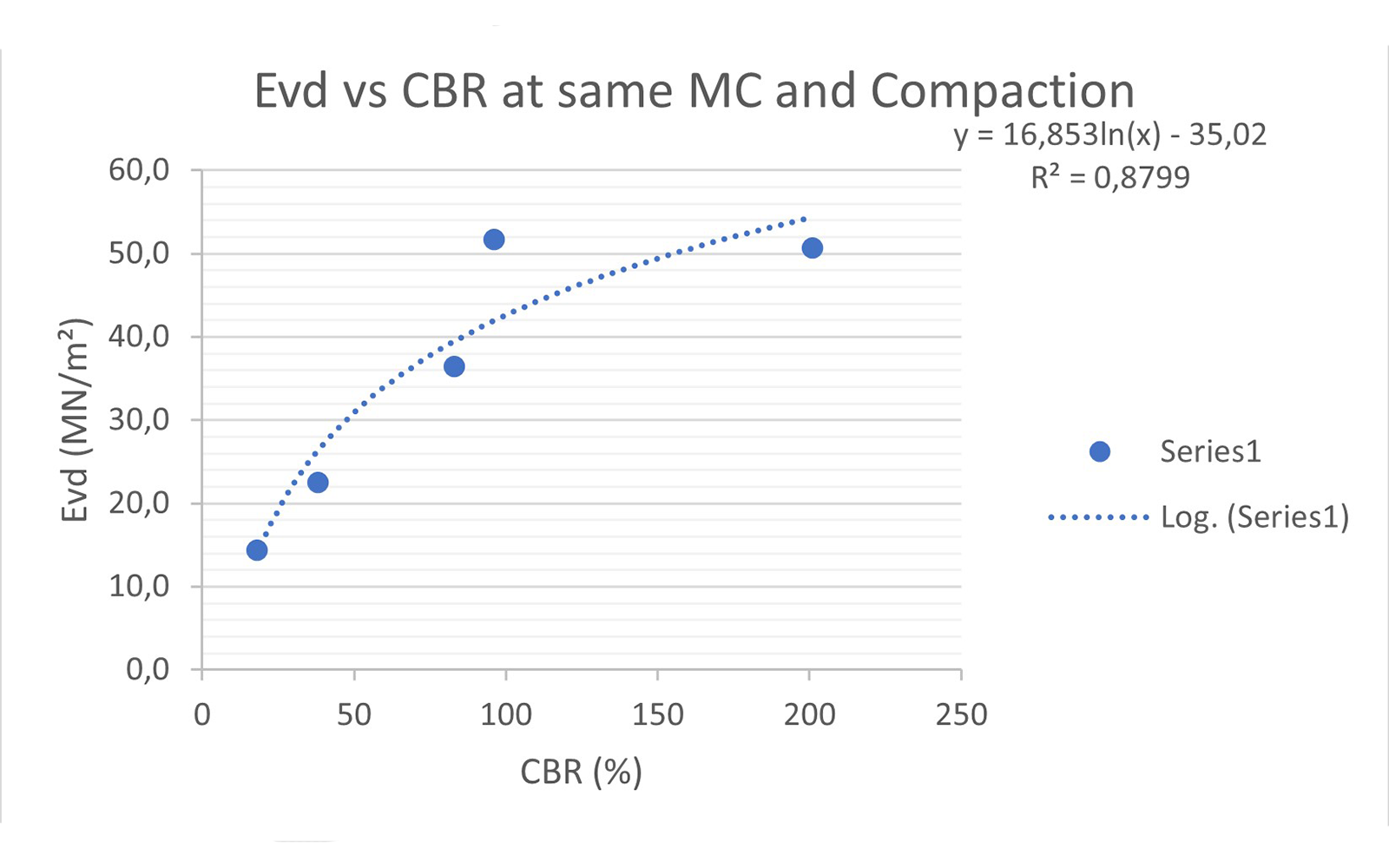
CBR tests were done at the same moisture contents and degree of compactions and correlated with the LWD results. A logarithmic relationship with an R² value of 0.88 was observed. Both parameters are equally affected by higher moisture contents and degree of compaction.
The stiffness of the unbound granular material (UGM) layer in a flexible pavement is a key factor in preventing material failure. However, current quality assurance/quality control (QA/QC) procedures in southern Africa rely on density measurements, which do not reflect the design parameters.
The Lightweight Falling Deflectometer (LWD) is a device that can be used to measure the stiffness of UGM layers. Researchers have found a strong correlation between the LWD and CBR of UGM layers, which could be used to promote the use of the LWD in southern Africa for QA/QC of UGM layers.
The adoption of the LWD in southern Africa would be beneficial because it would allow for more accurate and reliable assessment of the quality of road construction. This could lead to safer and more durable roads, which would benefit all road users.
Further research is needed to test other materials and to develop a link between laboratory simulations and actual field conditions. However, the findings of this study suggest that the LWD has the potential to be a valuable tool for QA/QC of UGM layers in southern Africa.
As Australia’s most flood-prone state, SMEC’s experience in Queensland has shown how decisions made across the infrastructure lifecycle can shape long-term resilience.
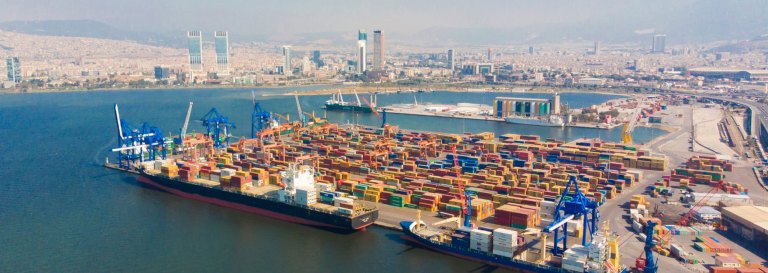
Intermodal transport is increasingly recognised not as a logistics concept, but as a defining framework for modern transport infrastructure planning and supply chains.
Infrastructure projects are often measured by what they build: kilometres of roads, megawatts of power generated or assets delivered.
Uncertainty has become a defining feature of the environment in which infrastructure is planned, financed and delivered. Geopolitical tensions, economic volatility, climate risk, changing investment priorities and rapid advances in technology are reshaping the assumptions on which long-term infrastructure decisions have traditionally been made.