


Expertise


From the early pioneers on the Snowy Mountains Hydroelectric Scheme, to our leaders and innovators of today, our people make us who we are.
Through our network of global specialists and by collaborating with local partners, we connect you with the best teams and capabilities to deliver highly innovative and sustainable solutions.
As an organisation we are continually evaluating ways we can better provide a safe, flexible, inclusive and respectful workplace for our people and clients.
People are at the heart of our organisation, we strive to create a flexible, diverse and inclusive environment that enables our people to thrive to their fullest potential.
Explore career opportunities
For communities, the real value of infrastructure lies in what it enables. Can children reach school safely throughout the year? Can families access healthcare during emergencies? Can communities connect to markets, employment opportunities and essential services? These questions shift the focus from infrastructure outputs to social outcomes, and in doing so, change how projects are planned and prioritised.
As governments and development partners work to improve resilience, inclusion and service delivery across the Asia-Pacific region, there is growing recognition that infrastructure should not be viewed as an end in itself. Instead, it should be seen as a platform for improving people’s lives.
Traditionally, infrastructure planning has often focused on technical requirements, engineering feasibility and economic returns. These remain essential considerations, but they represent only part of the equation.
A more holistic approach considers how communities actually interact with infrastructure and how investments influence access to services, livelihoods and opportunities. By combining spatial analysis, community engagement and evidence-based planning, it becomes possible to better understand where investments can deliver the greatest social value.
This approach is particularly relevant in geographically dispersed and climate-vulnerable regions where communities face significant barriers to accessing education, healthcare, government services and economic opportunities.
The Vanuatu Roads for Development Program provides a practical example of how infrastructure planning can support broader social outcomes.
Rather than viewing rural roads solely as transport assets, the program focused on understanding how road access influences daily life and community wellbeing. Accessibility mapping, GPS-based road inventory information, road condition data and traffic assessments were used alongside community participation to identify where investments could have the greatest impact on access to essential services.
The results demonstrate the potential of this approach.
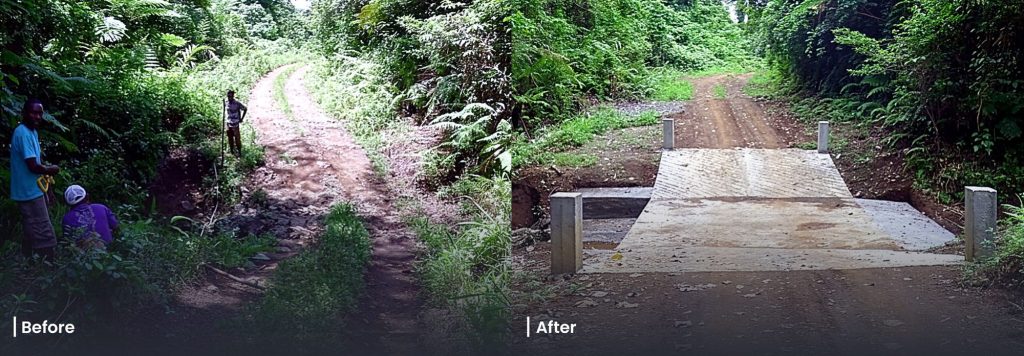
The program increased the all-weather passable rural road network from 1,050 kilometres to 1,370 kilometres, representing a 30 percent increase. It also increased the proportion of the rural population living within two kilometres of an all-weather road, benefiting approximately 21,000 additional people. Improved access meant that 26 health centres and 39 schools became reachable via all-weather roads.
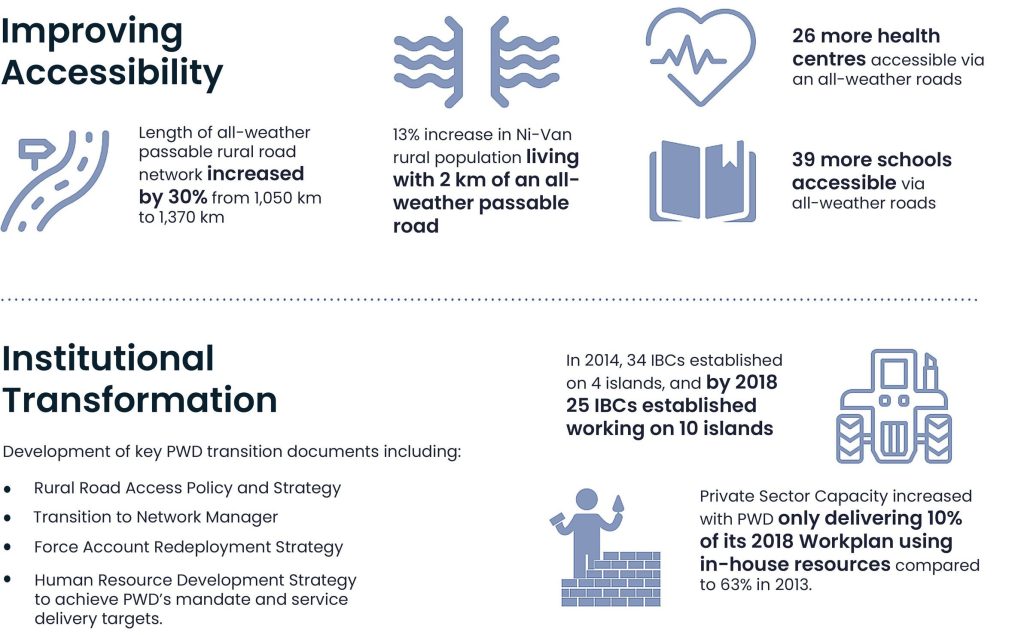
These outcomes demonstrate that successful transport infrastructure is about more than kilometres of road. It’s about enabling access to services, creating opportunities and supporting the communities that rely on this infrastructure.
The program also demonstrated the value of community-based contracting and maintenance models, supporting local participation, ownership and long-term sustainability. Community involvement was not treated as a separate workstream but as a core component of effective infrastructure delivery.
Technical analysis is essential, but data alone is rarely sufficient.
Communities often possess a deep understanding of how infrastructure influences daily life, where access barriers exist, and which locations are most critical for service delivery. Incorporating local knowledge into planning processes can improve decision-making, identify risks earlier and strengthen project outcomes.
Participatory approaches help ensure that infrastructure investments reflect how people actually move through and use their environments. They can also reveal challenges that may not be immediately visible through technical assessments alone, particularly in remote or vulnerable communities.
Meaningful engagement is equally important, strengthening transparency and trust. Projects are more likely to achieve lasting success when communities understand how decisions are made and have opportunities to contribute to those decisions.
While the Vanuatu experience focused on rural access, similar principles can be applied across a wide range of sectors.
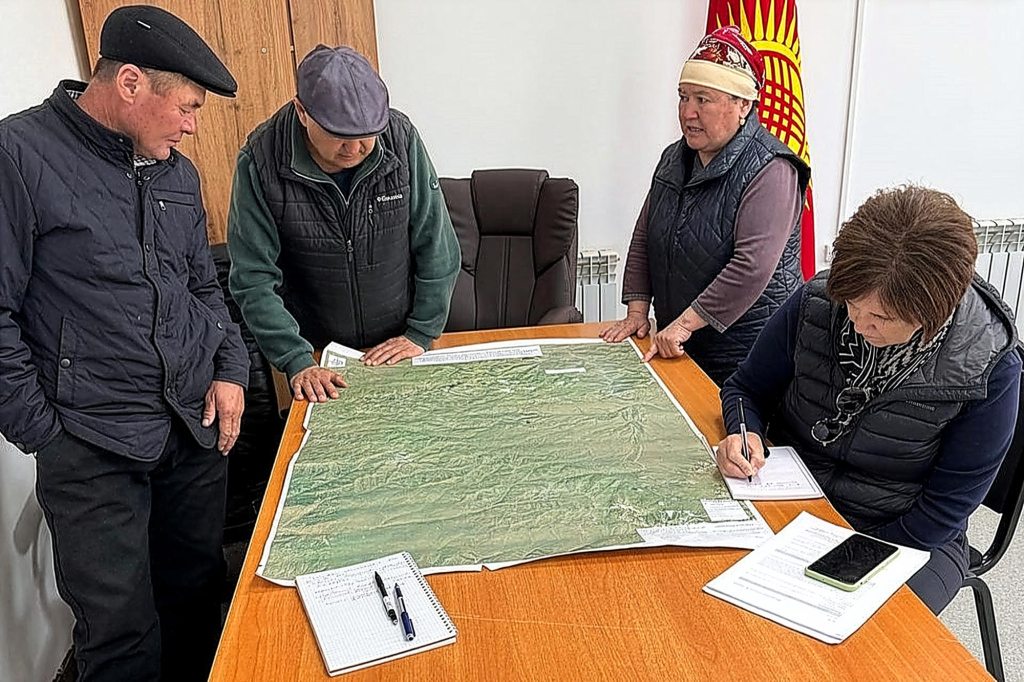
Kambarata-1 Hydropower Plant Project in the Kyrgyz Republic demonstrates how participatory approaches can support the planning of complex, large-scale infrastructure. Project preparation incorporated participatory mapping, social learning workshops, validation discussions and community feedback mechanisms to improve understanding of environmental, social and livelihood considerations.
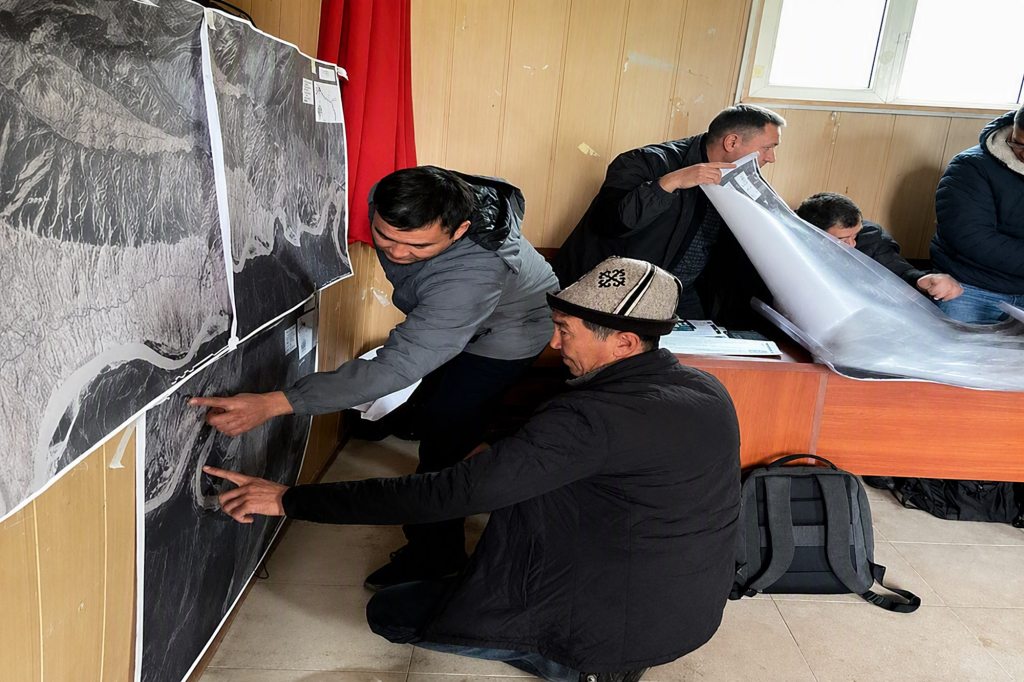
Although the context differs significantly from rural transport infrastructure, the underlying lesson remains the same. Combining technical expertise with community insight can lead to better-informed decisions, stronger risk management and more durable project outcomes.
This demonstrates that community-centred planning is not limited to social infrastructure projects. It is equally relevant to major energy, water, transport and climate resilience investments.
As development challenges become increasingly complex, infrastructure planning must evolve accordingly.
Future projects will need to address climate resilience, inclusion, economic development and service access simultaneously. Achieving these objectives requires infrastructure solutions informed by both engineering considerations and a deeper understanding of how communities experience and use infrastructure.
Spatial evidence, accessibility analysis and meaningful community participation provide practical tools for delivering this outcome. Together, they help ensure that investment decisions reflect real needs, improve access to essential services and create infrastructure that delivers long-term social value.
For SMEC and others delivering infrastructure solutions, success should be measured by whether the infrastructure genuinely improves access to education and healthcare, creates economic opportunities and helps communities become more resilient.
When infrastructure is planned through that lens, its impact extends far beyond the asset itself.
Zahid Iqbal presented a case study on the Sustainable Road Infrastructure Investment Project (SRIIP) at the recent Blue Pacific Infrastructure Conference in Brisbane, Australia. This event was organised by the Australia Pacific Islands Business Council (APIBC). The case study sheds light on sustainable road infrastructure development in the Federated States of Micronesia (FSM). It highlights the critical role SMEC is playing in advancing this significant endeavor.
The construction industry plays a considerable role in global energy consumption and energy-related carbon emissions, attributed to the manufacture of building materials and products. The current, linear ‘take-make-dispose’ model of resource consumption has led to environmental degradation and resource depletion.
Across the vast and diverse landscapes of rural Africa, many communities face significant barriers to accessing essential infrastructure. Limited access to clean water, sanitation, reliable transportation, and consistent energy supply impedes daily life, and deepens existing inequalities.