
Sydney Metro – Western Sydney Airport, Station Boxes and Tunnelling (WSA-SBT)


From the early pioneers on the Snowy Mountains Hydroelectric Scheme, to our leaders and innovators of today, our people make us who we are.
Through our network of global specialists and by collaborating with local partners, we connect you with the best teams and capabilities to deliver highly innovative and sustainable solutions.
As an organisation we are continually evaluating ways we can better provide a safe, flexible, inclusive and respectful workplace for our people and clients.
People are at the heart of our organisation, we strive to create a flexible, diverse and inclusive environment that enables our people to thrive to their fullest potential.
Explore career opportunities
The city-shaping project, spanning from St Marys through to the new airport and city of Bradfield, is poised to deliver a significant economic stimulus for Western Sydney, supporting more than 14,000 jobs during construction for the New South Wales and national economies.
The 23-kilometre metro railway will establish vital connections between residential areas and future job hubs, at Airport Business Park and Bradfield, and connect travellers from the new airport into Sydney’s broader public transport network.
CPB Contractors Ghella (CPBG) was selected by the New South Wales Government to deliver the Sydney Metro – Western Sydney Airport, Station Boxes and Tunnelling Works (WSA-SBT) package.
The WSA-SBT package involves the design and construction of 9.8 kilometres of twin tunnels and excavations for stations at St Marys, Orchard Hills, Airport Business Park, Airport Terminal and Bradfield (Aerotropolis) and services facilities at Bringelly and Claremont Meadows.
CPBG engaged Robert Bird Group and SMEC to undertake detailed design services for the SBT works.
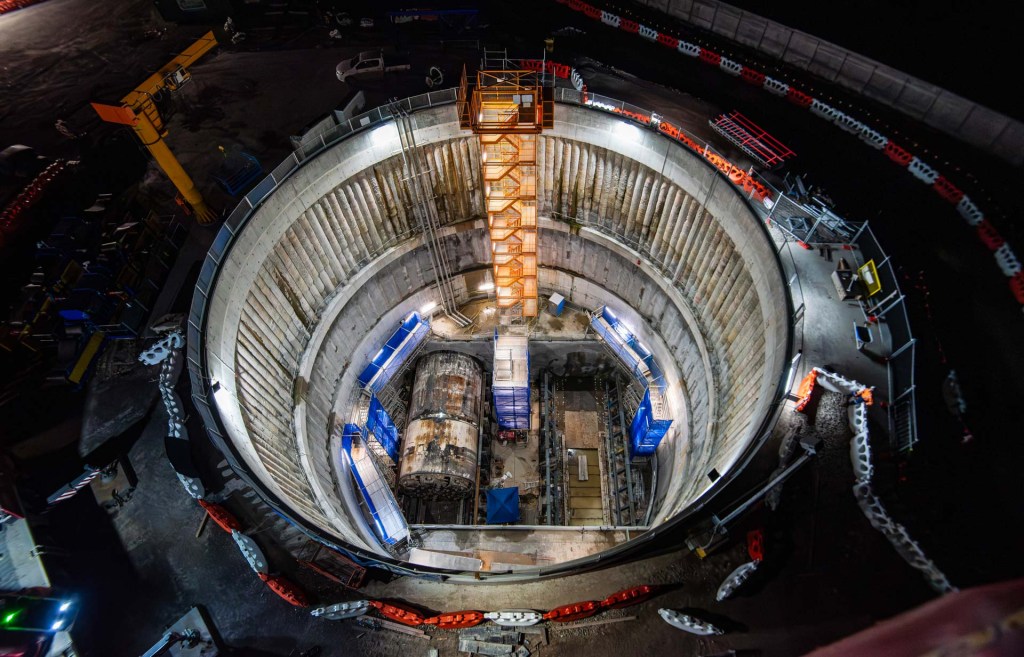
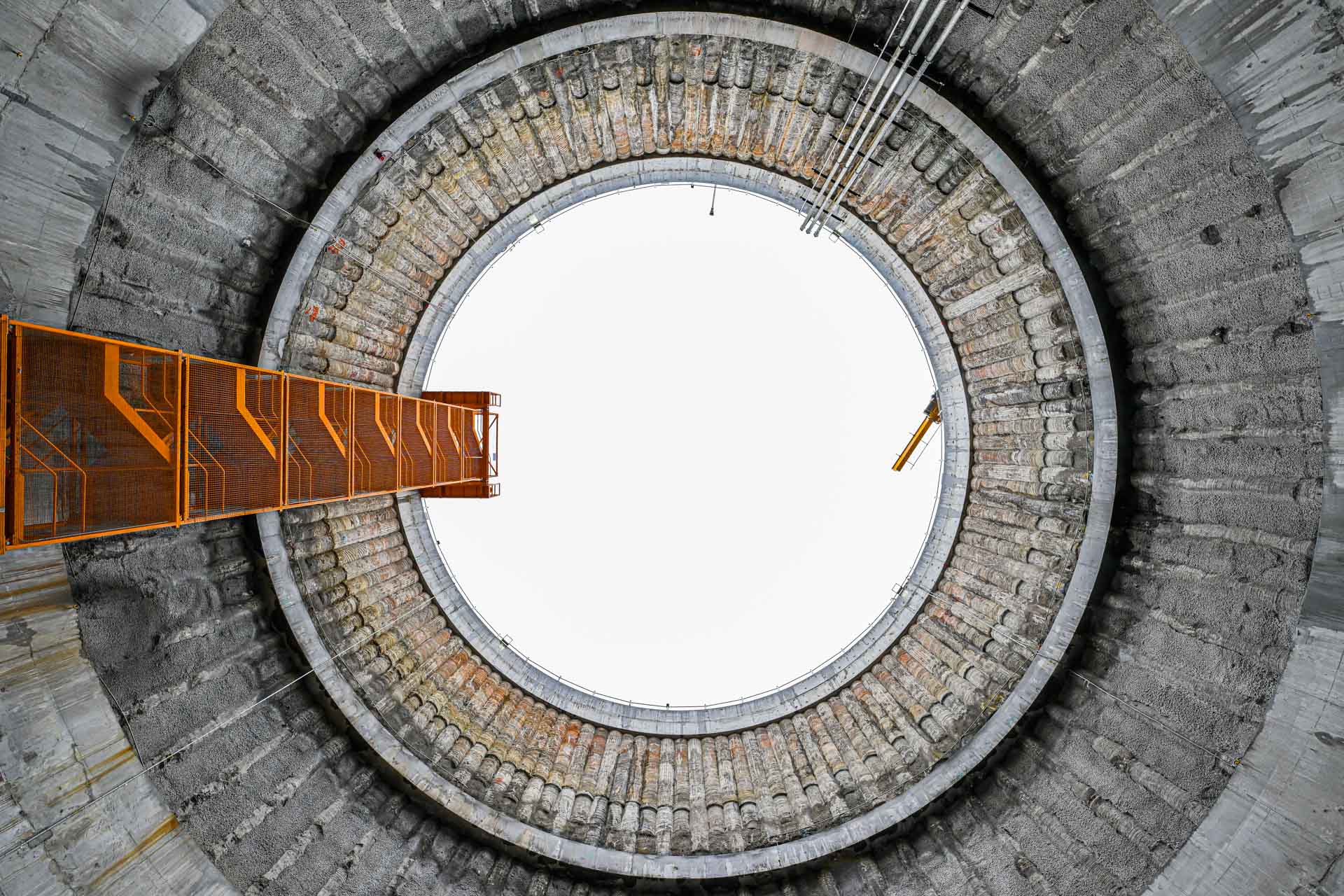
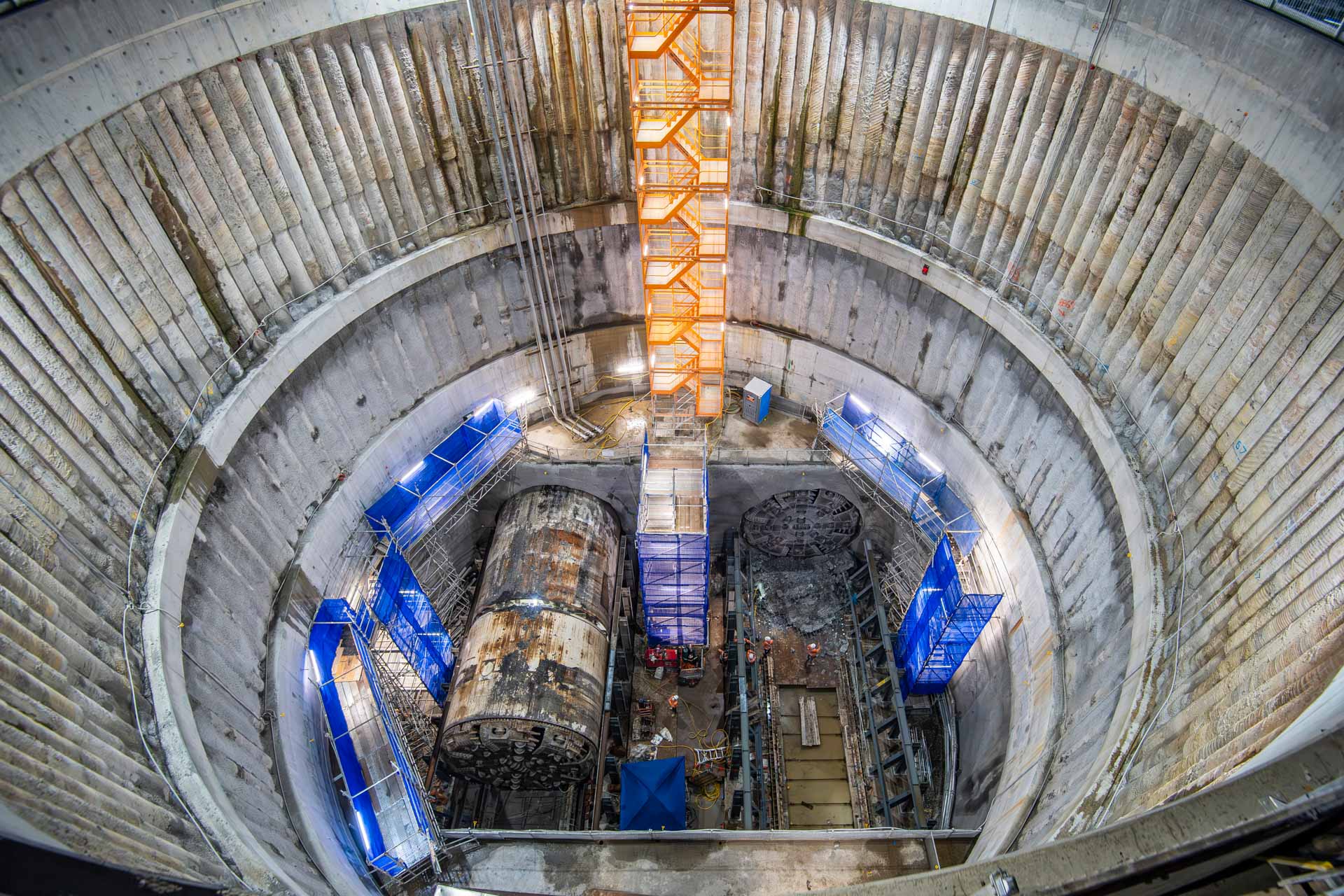
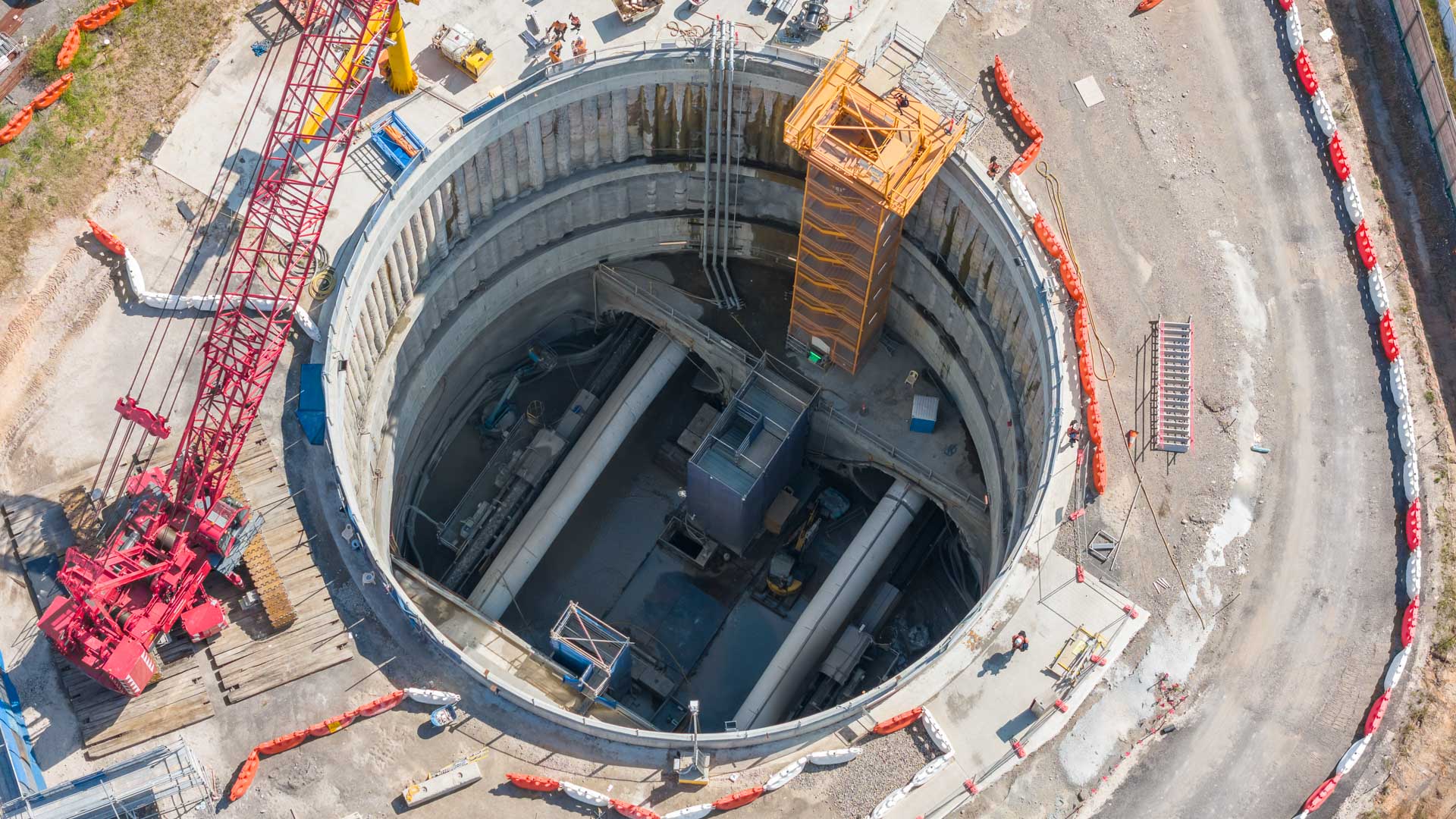
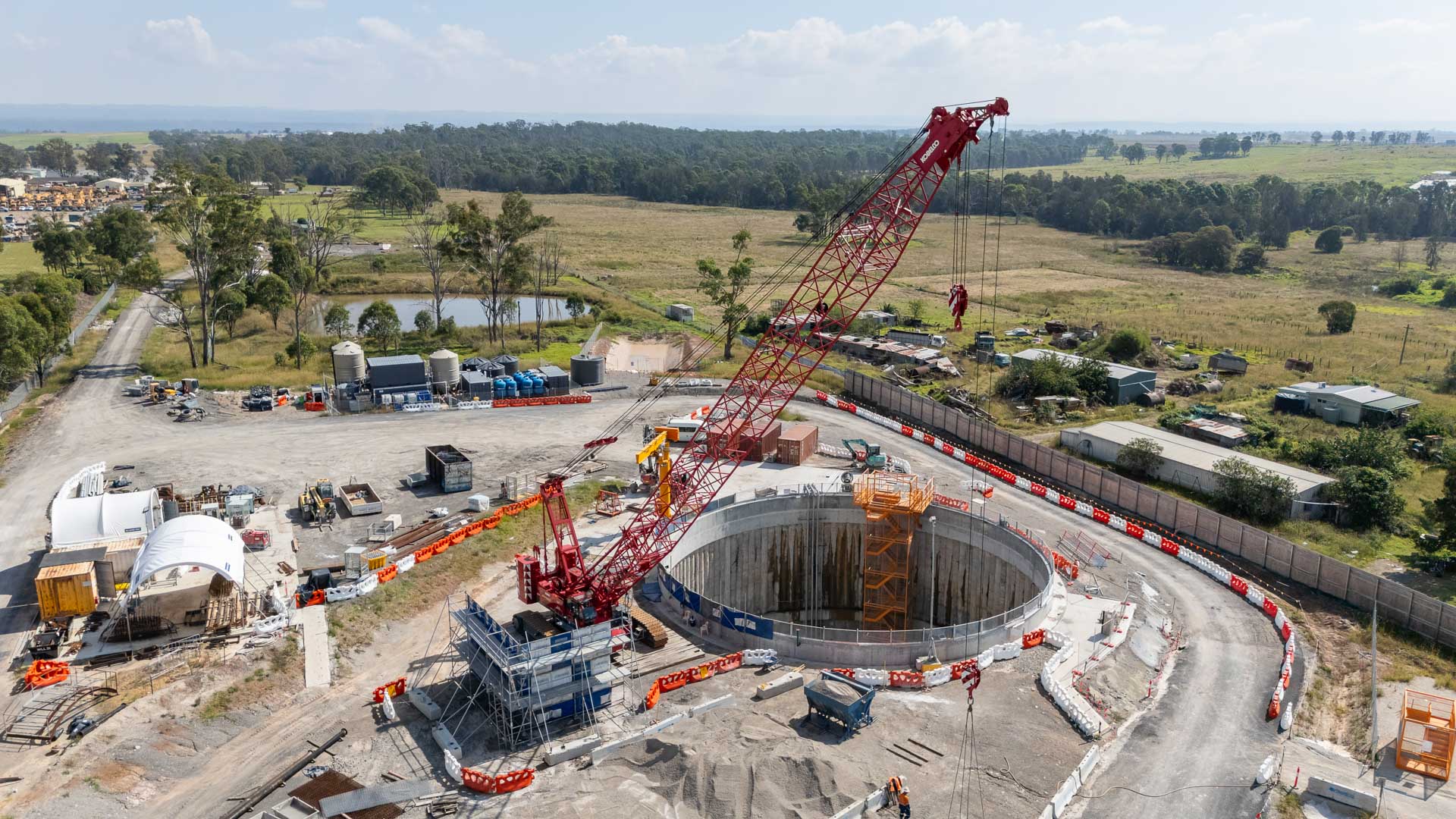
Robert Bird Group and SMEC played a pivotal role in the realisation of a significant innovation – the design of a ground retention system for a substantial circular maintenance shaft for the Bringelly Services Facility.
This shaft boasted impressive dimensions, featuring an internal diameter of 29 metres and a depth reaching up to 32 metres. SMEC was responsible for the assessment of the geotechnical aspects of the shaft. Robert Bird Group was responsible for the design of the shaft structure. The purpose of the shaft is to provide vertical access between the metro tunnels and the ground surface through which construction stage support can be facilitated and where permanent maintenance facilities can be constructed.
The construction of the retention structure holds a pivotal position in the critical path timeline of the overall construction process. A primary design goal was the development of a system that could be efficiently constructed and excavated within a brief timeframe of six months. Another key objective centred around maintaining cost-effectiveness, while ensuring adherence to performance specifications. Sustaining a minimum clear internal opening throughout the project duration was also required.
Site investigations found that ground conditions at this site can apply significant forces making it suboptimal to utilise a conventional retaining structure such as secant piles, a diaphragm wall or a lined shaft with closely spaced ring beams. Robert Bird Group and SMEC designed a unique retention structure configuration optimised to promote as much flexibility as possible.
To validate the design, SMEC developed a comprehensive three-dimensional finite element model of the entire shaft using Plaxis 3D software. This approach not only instilled confidence in compliance with project specifications but also enabled intricate evaluations, such as ovalisation due to ground variability, stresses and tunnelling activities.
The result of this approach was a design able to meet the design objectives with substantially less steel and concrete than common alternatives. This provided savings in cost, time and greenhouse emissions, offering consequential program, budgetary and broader scale improved sustainability outcomes.
The innovative design employed on the temporary shaft retention structures holds promising applications for future endeavours by SMEC, Robert Bird Group and the broader industry, particularly in the realm of road and rail tunnel construction.
For the industry, the design approach offers a standardised solution for tunnelling works confronted by similar geological conditions, creating a template for addressing challenges related to weak rock deposits, locked-in rock stresses, and swelling issues. This can lead to streamlined processes, reduced project timelines and enhanced safety measures, contributing to the overall advancement of tunnel construction practices.
The adaptability of this innovation potentially influences future design standards and regulations. As the industry seeks sustainable and efficient solutions, the incorporation of this innovative approach can set a precedent for environmentally conscious and resource-efficient tunnelling practices.