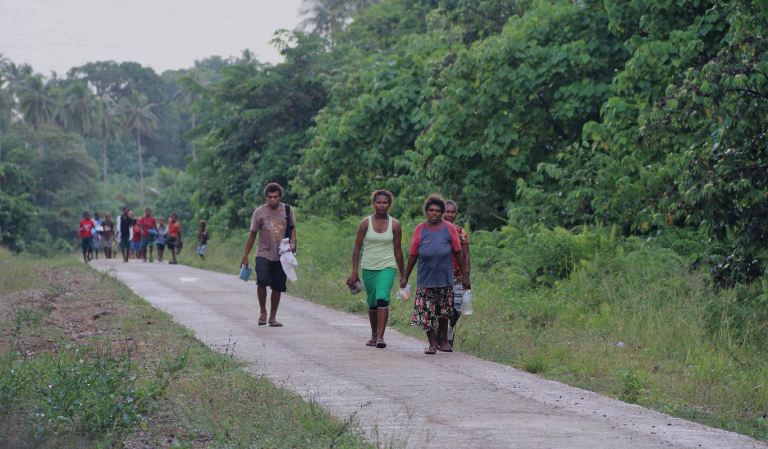



World Water Day 2023


From the early pioneers on the Snowy Mountains Hydroelectric Scheme, to our leaders and innovators of today, our people make us who we are.
Through our network of global specialists and by collaborating with local partners, we connect you with the best teams and capabilities to deliver highly innovative and sustainable solutions.
As an organisation we are continually evaluating ways we can better provide a safe, flexible, inclusive and respectful workplace for our people and clients.
People are at the heart of our organisation, we strive to create a flexible, diverse and inclusive environment that enables our people to thrive to their fullest potential.
Explore career opportunities
India demographics in a global context
In 2019, India launched Jal Jeevan Mission, with the aim to provide a Functional Household Tap Connection (FHTC) to every rural household by 2024. The aspiration of the community is to have piped water supply within their household premises, improving ›ease of living‹. The assured availability of drinking water will improve the health and socio-economic condition of rural populations and reduce the burden of water collection, which often falls on women and girls.
An increasing population, irregular rainfall patterns and depletion of ground water, are just some of the challenges related to scarcity of water. These challenges are often exacerbated by over extraction, low storage capacity, climate change, inadequate maintenance of water supply systems, and presence of contaminants.
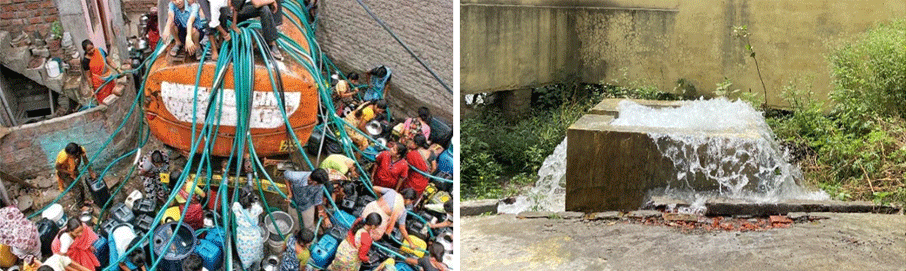
The Smart Water Village concept is based on the underlying principle that we can readily deploy smart technology to gather data, an effective framework in the implementation of a more functional water supply system. The proposed pilot study will centre on the community of Kudha Keshavpur in Ayodhya, Uttar Pradesh which is home to 8,726 residents.
The aim of the Smart Water Village concept is to demonstrate Proof-of-Value in monitoring and detecting leakage from the water distribution network using Smart technology. The project will integrate digital technology across the water value chain to form better system-level decisions and improve operations management, maintenance, capital planning, and customer service.
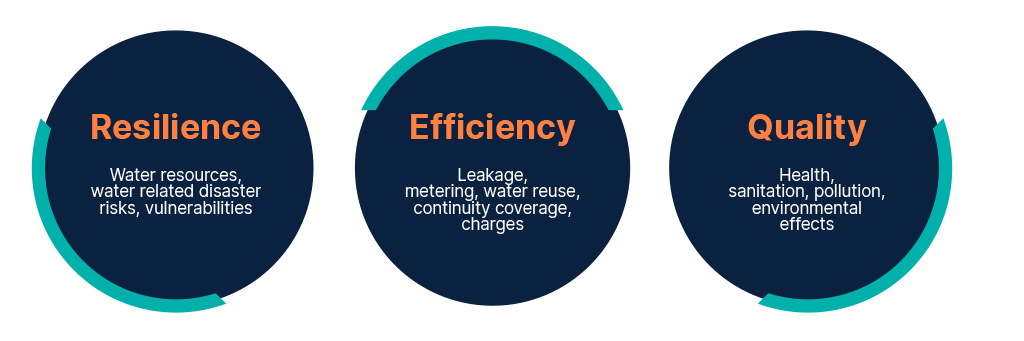
To achieve the three strategic pillars, Resilience, Efficiency and Quality, the team has identified five key enablers:
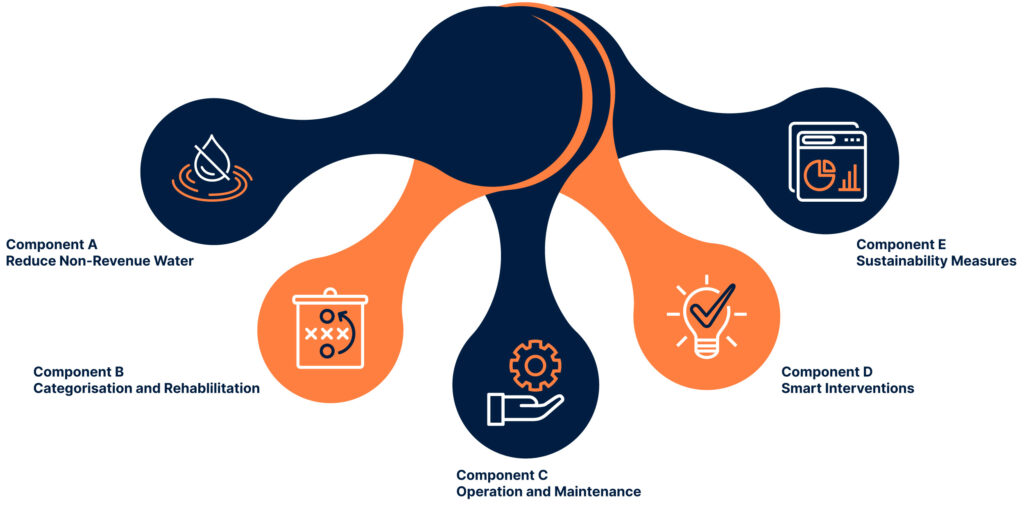
This sustainable operational framework will establish an end-to-end water network ecosystem from water supply to asset management. The Smart Water Village identifies a viable model for the future governance and development of water supply infrastructure within the rural context of India.
As part of the pilot study SMEC has proposed the integration of IoT sensors and smart water technology throughout the existing water network(s). A consolidated GIS based Assets Management Database would be developed to inform operational decisions and maintenance. SCADA systems have also been proposed to automate and streamline processes.
Leveraging readily available technology the proposed concept showcases the ability of rural communities to adapt to smart interventions which deliver more sustainable outcomes.

As Australia’s most flood-prone state, SMEC’s experience in Queensland has shown how decisions made across the infrastructure lifecycle can shape long-term resilience.
Intermodal transport is increasingly recognised not as a logistics concept, but as a defining framework for modern transport infrastructure planning and supply chains.
Infrastructure projects are often measured by what they build: kilometres of roads, megawatts of power generated or assets delivered.
Uncertainty has become a defining feature of the environment in which infrastructure is planned, financed and delivered. Geopolitical tensions, economic volatility, climate risk, changing investment priorities and rapid advances in technology are reshaping the assumptions on which long-term infrastructure decisions have traditionally been made.