

Maryvale Solar & Energy Storage Project

From the early pioneers on the Snowy Mountains Hydroelectric Scheme, to our leaders and innovators of today, our people make us who we are.
Through our network of global specialists and by collaborating with local partners, we connect you with the best teams and capabilities to deliver highly innovative and sustainable solutions.
As an organisation we are continually evaluating ways we can better provide a safe, flexible, inclusive and respectful workplace for our people and clients.
People are at the heart of our organisation, we strive to create a flexible, diverse and inclusive environment that enables our people to thrive to their fullest potential.
Explore career opportunities
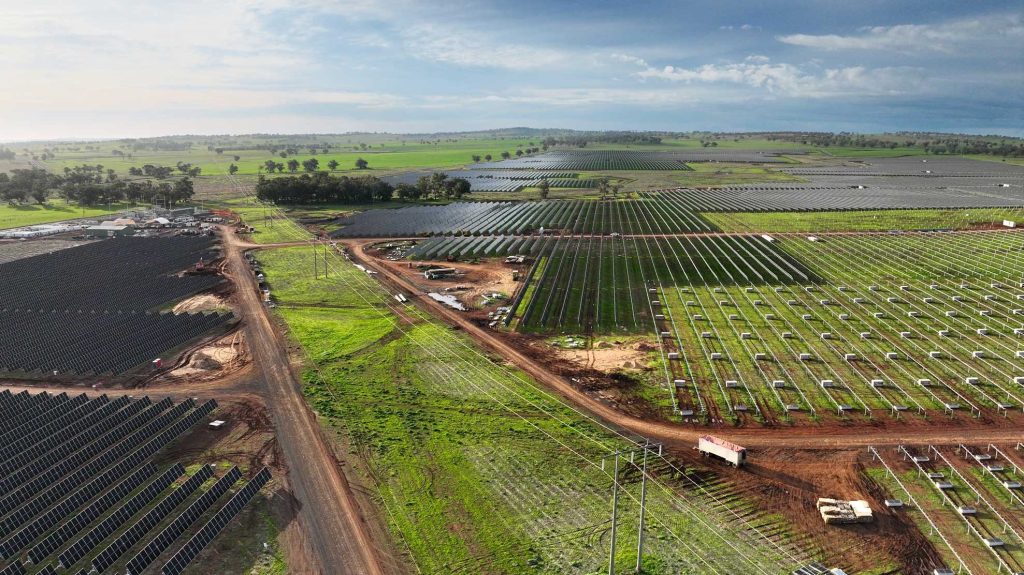
The project will have the ability to export 172MW of power into the electricity network thanks to an installed capacity of approximately 243MWp of photovoltaics ‘DC-coupled’ with 409MWh of energy storage. Once completed, the project will generate enough electricity to power over 80,000 homes annually and reduce carbon emissions.
With construction having commenced in mid-2025, MSP is positioned as a flagship hybrid renewable development, one that also highlights SMEC’s commitment to innovation, collaboration and digital-first engineering.
 Overall Layout Design
“The Maryvale Solar & Energy Storage Project is the first solar initiative that SMEC has taken to detailed design with a DC-coupled BESS, where the batteries and solar share the same inverters,” explains Nicholas Rudland, SMEC Principal Engineer. “That introduced substantial technical complexity, particularly around connection design, cable routing and thermal management.”
To overcome these challenges, SMEC undertook extensive engagement with the client and implemented large-scale cable thermal modelling to accommodate the high volume of cables within the project’s footprint. This ensured a safer, more reliable electrical design that minimises downtime risk and supports long-term operational excellence.
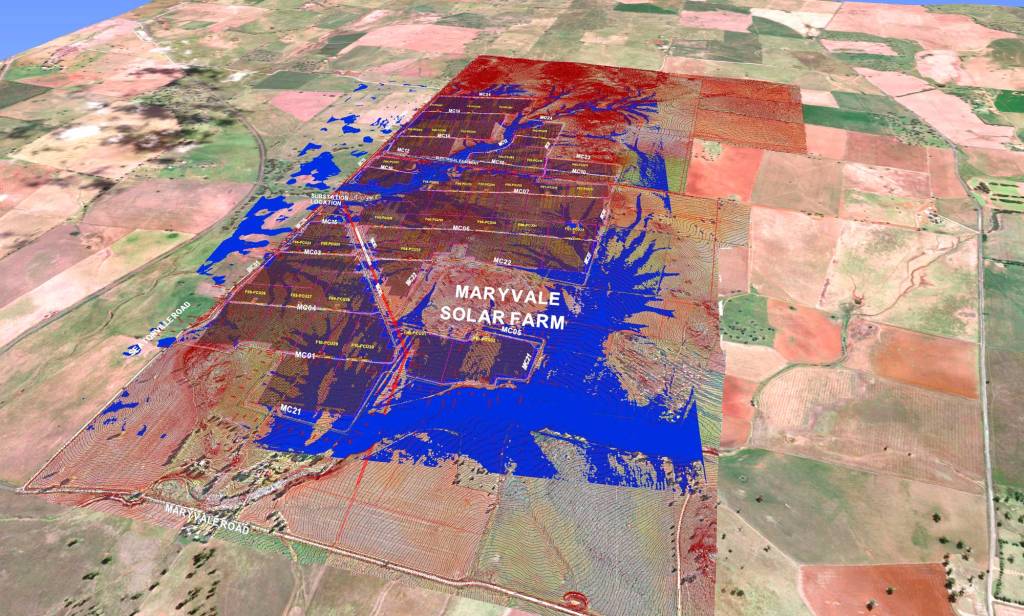
The design team also produced detailed 3D layout arrangements, helping visualise the dense electrical infrastructure and enabling smarter spatial planning and clash detection early in the design process, saving time and money during the project.
A key enabler of SMEC’s success at MSP has been the integration of Autodesk Construction Cloud (ACC) – a digital collaboration platform that has transformed how multidisciplinary teams coordinate on complex infrastructure projects.
SMEC recently demonstrated the power of ACC on a Queensland solar farm project, where SMEC’s expert team pioneered the use of a fully federated 3D model hosted in the cloud. This approach unified disciplines, electrical, civil, geotechnical, structural, flooding and survey, into a single digital environment, enabling real-time collaboration. The project was delivered seven months ahead of schedule, with significant reductions in design clashes, rework and administrative burden.
For the Maryvale Project, SMEC has applied the same cloud-based, federated design philosophy, allowing real-time engagement between design disciplines and the client. “We regularly meet with the client on a weekly basis, but the real value has come from being able to coordinate design decisions seamlessly using ACC,” said Nicholas. “This level of connectivity improves accountability, enhances visibility across the project and speeds up decision-making.”
Sustainability is at the core of the Maryvale Solar & Energy Storage Project’s mission, and inherent to solar infrastructure, and SMEC has gone beyond standard practice to embed sustainable thinking in every phase of design. “We took extra steps to minimise material usage, which ties directly to cost efficiency,” explained Naouras Saleh, SMEC Graduate Engineer. “That meant optimising cable lengths, refining trench routes, and selecting lower-impact materials where feasible.”
MSP also represents a key strategic evolution in SMEC’s approach to solar project design. While it continues SMEC’s extensive portfolio of large-scale solar projects, the integration of batteries and the move to 3D modelling signals a shift towards more advanced, future-ready design.
“We’re learning the importance of continually upgrading our design capabilities to accurately represent what will be built,” Naouras noted. “3D modelling and digital coordination are no longer optional, they’re essential to delivering complex renewable infrastructure at scale.”
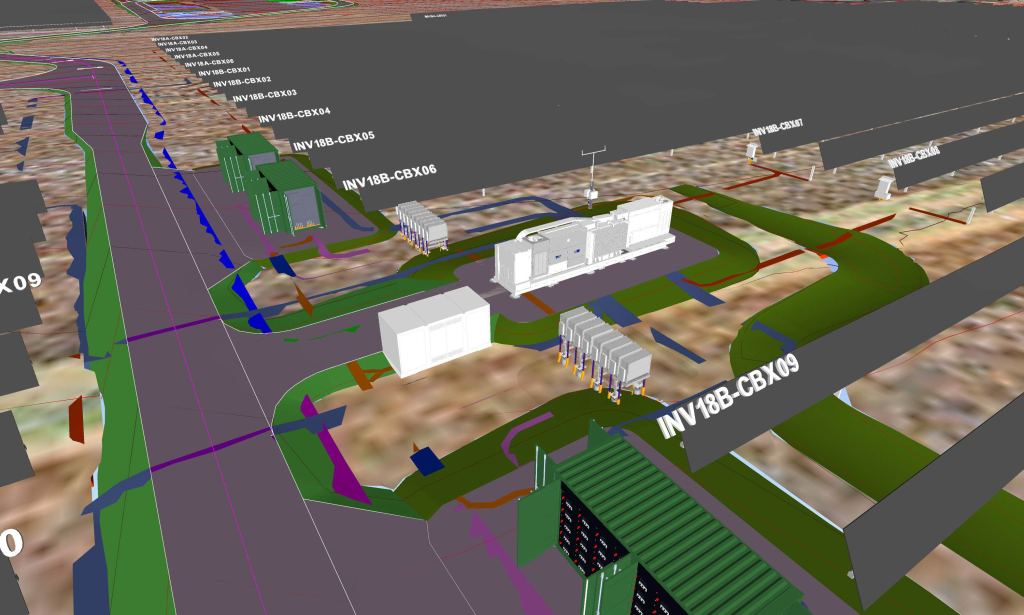 Detailed Design
One of the key lessons emerging from MSP has been the importance of accurate site-representation during early-stage design “to ensure our layouts reflect site conditions and construction needs,” said Naouras.
From SMEC’s perspective, Naouras says the Maryvale Project represents both continuity and change. “It continues our strong presence in large-scale solar but also marks a shift toward deeper integration of energy storage and more spatially accurate design approaches.”
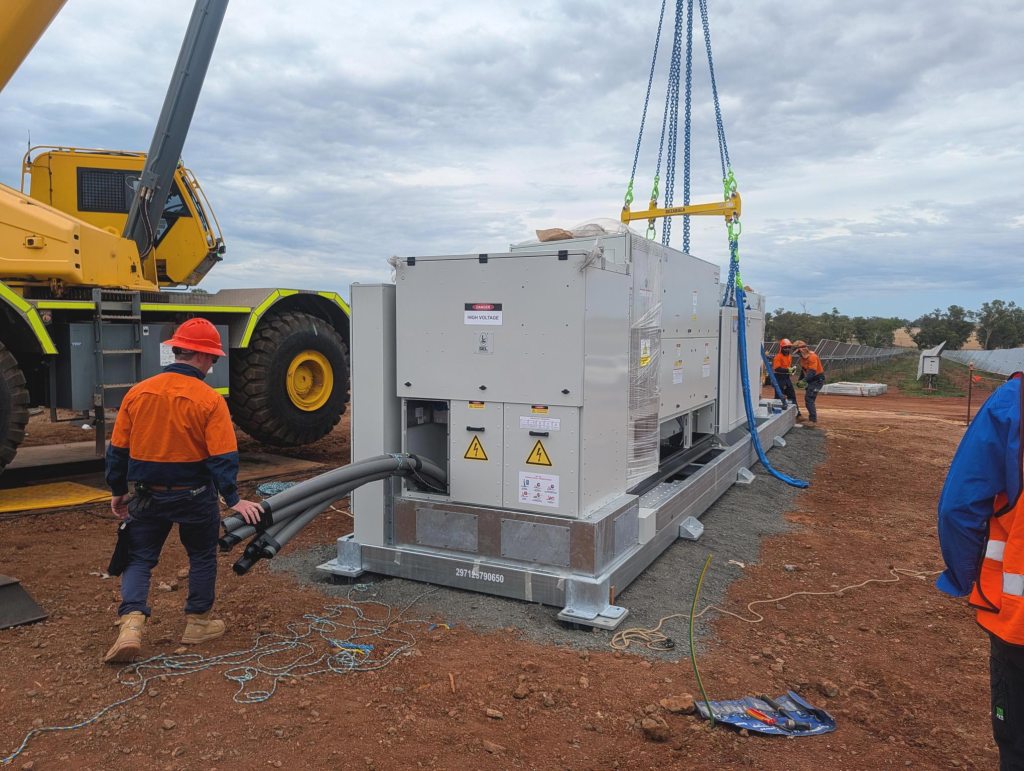
According to the team, one of the most rewarding aspects of the Maryvale Project has been the collaborative spirit across the project ecosystem. From client stakeholders to suppliers and SMEC’s internal design teams, the shared commitment to innovation has been key to driving progress.
“It’s incredibly rewarding to work with such an engaged and forward-thinking team,” says Nicholas. “The Maryvale Project is not just another solar initiative, it’s helping redefine how we design, deliver and integrate renewable energy in Australia.”
SMEC’s digital-first, sustainability-focused design approach is ensuring the Maryvale Solar & Energy Storage Project will deliver long-term value; not just to the grid, but to the communities and energy future it supports.