

M7 – M12 Integration


From the early pioneers on the Snowy Mountains Hydroelectric Scheme, to our leaders and innovators of today, our people make us who we are.
Through our network of global specialists and by collaborating with local partners, we connect you with the best teams and capabilities to deliver highly innovative and sustainable solutions.
As an organisation we are continually evaluating ways we can better provide a safe, flexible, inclusive and respectful workplace for our people and clients.
People are at the heart of our organisation, we strive to create a flexible, diverse and inclusive environment that enables our people to thrive to their fullest potential.
Explore career opportunities
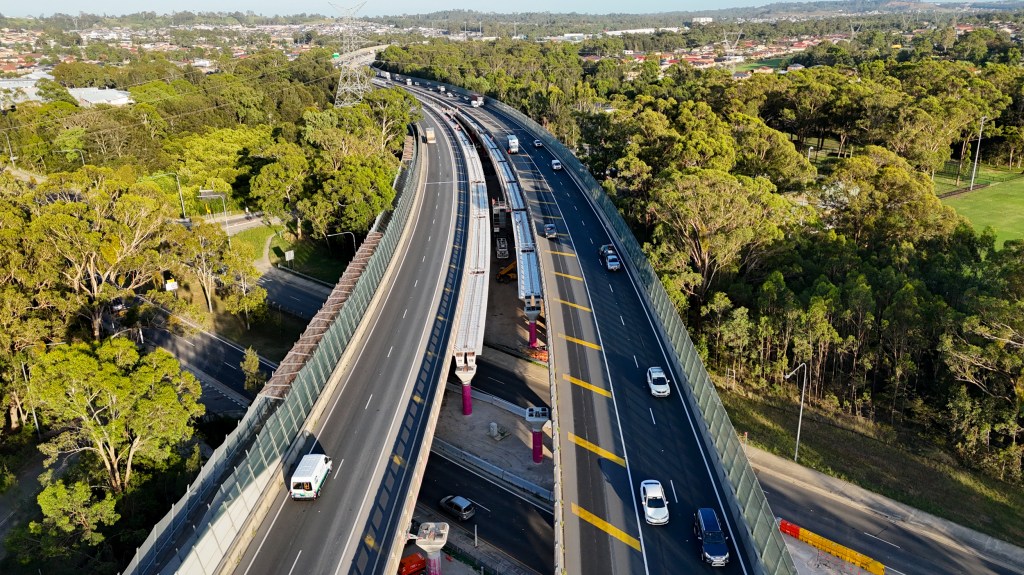
The M7-M12 Integration project will connect this emerging Western Sydney region to the wider Sydney road network, and smoothly facilitate the expected increase in traffic through three main deliverables:
The M7-M12 Motorway Integration project is due for completion in 2026. Projections are that it will deliver 4 million + hours of reduced travel time per year for local commuters.
The upgrade to Elizabeth Drive and adjacent roads will facilitate a new connection between the eastern end of the new toll-free M12 Motorway, the M7 Motorway and the local road network.
Works in this section include:
In a highly constrained environment, constructable practical solutions were critical to the successful upgrade of Elizabeth Drive. The proximity of the M12’s earthworks and drainage requirements to the Elizabeth Drive boundaries demanded extensive and well-coordinated design efforts to mitigate against conflicts. These challenges were addressed by optimising designs for road alignments, retaining structures, utility relocations and water quality controls solutions.
The project also presented an opportunity to enhance future active transport connectivity, ensuring safe and efficient passage for pedestrians and cyclists. The design prioritised active transport needs, delivering high levels of safety through thoughtful lighting, spatial planning, and seamless network integration—contributing to improved community outcomes and long-term accessibility.
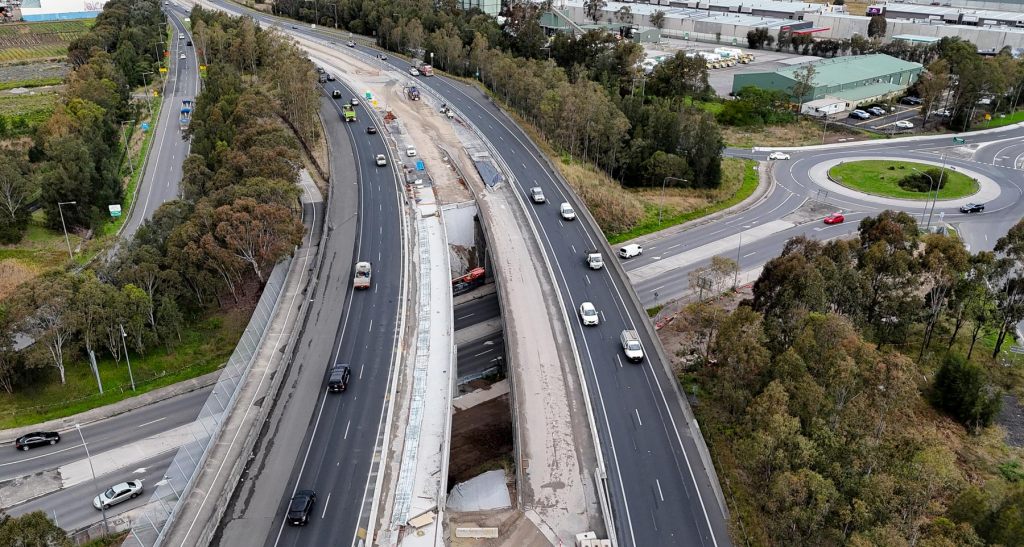
The M7-M12 Interchange is a direct motorway-to-motorway connection between the existing M7 Motorway and the new toll-free M12 Motorway, which includes:
The M7-M12 Interchange connection involved the construction of two new incrementally launched concrete box girder bridges. The Jacobs-SMEC design team provided alignment and geometric design solutions for these complex structures and for the large retaining walls and other structures at the Interchange.
Extensive civil infrastructure works were required to connect the launched bridges to the M7 and M12 Motorways. These roadworks interfaced with existing infrastructure and included major earthworks for substantial fills and cuts, water quality control features such as detention basins and swales, retaining walls, street lighting, active transport connections, and the integration of large spoil mounds into the site.
Optimising this complex, multidisciplinary design with a strong focus on constructability helped minimise disruption to the surrounding community. By leveraging existing geometric alignments and pavement conditions, the team delivered efficient and effective design solutions that reduced traffic delays during construction.
The M7 Motorway will be widened from a dual carriageway to three lanes in each direction between the M5 Motorway and Richmond Road. This upgrade includes:
The widening of 26 kilometres of motorway is a major undertaking. This challenge was further intensified by the need to also widen 41 existing bridges—an unprecedented scale of bridge works for a single project. Adding to the complexity, the M7 Motorway—one of Sydney’s busiest transport corridors, carrying an average of 189,000 trips per day—had to remain fully operational throughout construction. This required meticulous planning, innovative design solutions, and close coordination between the design and construct teams to ensure minimal disruption while delivering these critical infrastructure upgrades.
Each of the 41 bridge widenings presented unique structural and construction challenges, requiring tailored engineering solutions that balanced the need to maintain traffic flow, cost-efficiency, constructability, safety, and minimal impact on both existing infrastructure and the broader transport network. The multidisciplinary team addressed a range of technical complexities, including precise alignment between new and existing bridge sections, managing traffic-induced vibrations and differential deflection risks, preventing cracking during concrete curing, and ensuring commuter and worker safety under live traffic conditions. These challenges demanded close collaboration across design, engineering, and construction disciplines, fostering innovative approaches to problem-solving.
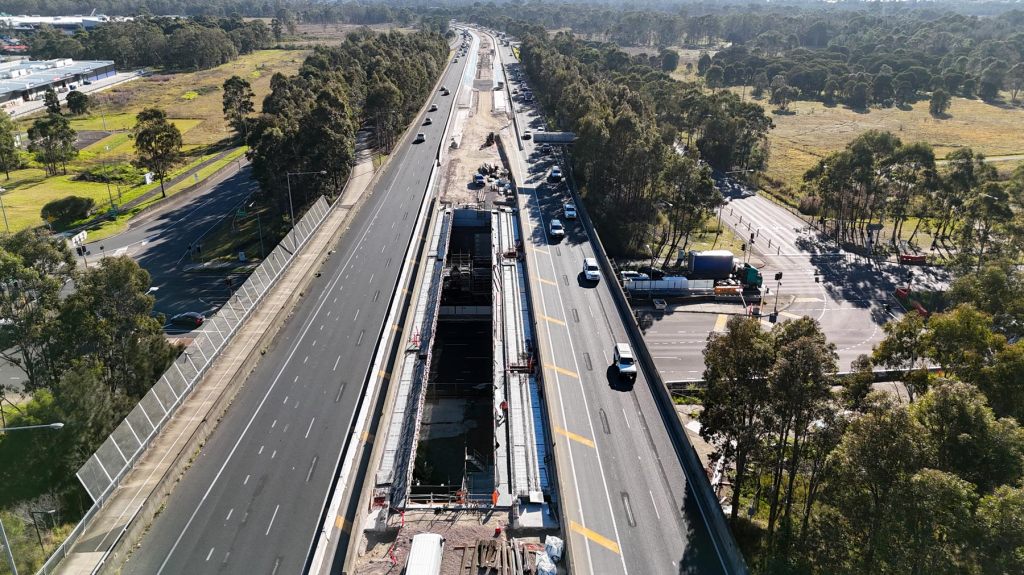
By harnessing diverse infrastructure expertise, the project team delivered several key innovations that significantly reduced overall costs, lowered construction risks, and enhanced road safety for local motorists.
To enable a seamless connection between new and existing bridge segments, the team implemented a longitudinal stitch pour—a design solution that eliminated the need for longitudinal joints. This approach not only improved safety for road users but also reduced long-term maintenance requirements, contributing to the overall durability and efficiency of the bridge infrastructure.
In close collaboration with the contractor, SMEC developed performance-based design criteria tailored to non-standard bridges. This criteria included dynamic deflection control, ensuring the structural integrity of the stitch pour under live traffic conditions. This innovative engineering solution demonstrated the value of early contractor involvement and performance-driven design in delivering resilient and cost-effective outcomes.
Adding a third lane to the M7 Motorway introduced a potential aquaplaning risk. As more traditional design solutions—such as regrading lanes individually—were not viable due to the site’s existing rigid pavement structure, SMEC proposed an alternative approach using Open Graded Asphalt (OGA), a permeable surface that effectively manages water runoff.
This innovative solution was validated through laboratory and field testing and accepted by Transport for NSW as a design concession. As a result, complex regrading was avoided at 21 locations, saving approximately 8,700m³ of asphalt and several million dollars in construction costs. The use of a uniform crossfall also streamlined construction, reduced material waste, and improved overall project efficiency.
The Sustainability Assessment Tool for Pavements (SAT4P) was applied to representative sections of each pavement type to assess whole-of-life greenhouse gas emissions, covering construction, maintenance, and asset disposal phases. This marked the first use of SAT4P on a Transport for NSW (TfNSW) project.
Beyond contributing to the project’s Infrastructure Sustainability Council (ISC) score, the tool’s implementation fostered strong collaboration between contractors and designers. This led to practical design innovations, with previously challenging elements reassessed as feasible. The joint venture structure further enabled seamless cross-company teamwork, accelerating knowledge sharing and upskilling—particularly among junior engineers.
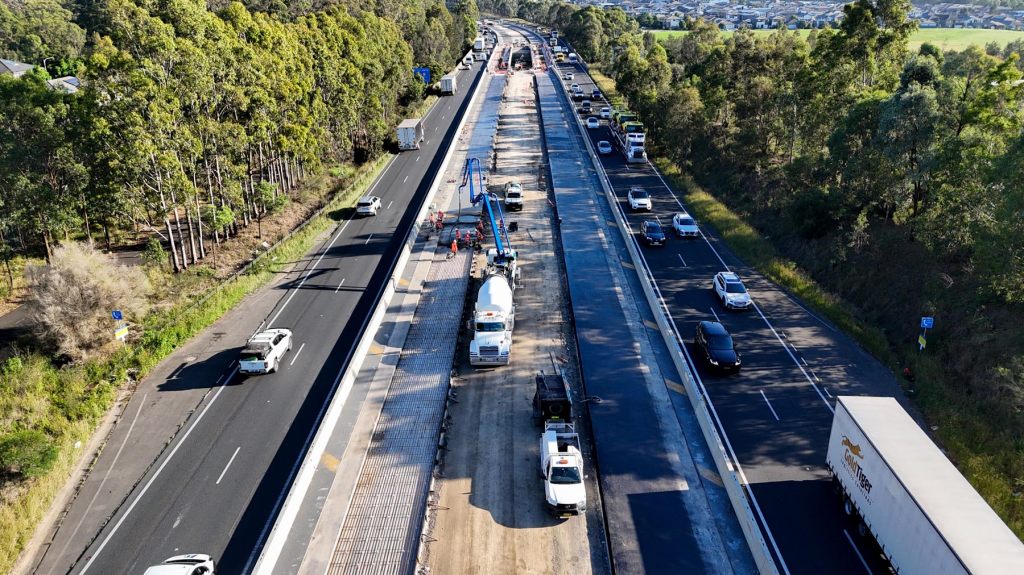
The M7–M12 Integration project represents a landmark investment in Western Sydney’s transport future. By delivering critical infrastructure upgrades—including new motorway connections, extensive bridge widening, and advanced safety and sustainability solutions—the project is laying the groundwork for a more connected, resilient, and efficient road network.
This project continues SMEC’s long history in revitalising the greater Sydney region. As current design partner in the adjacent Western Sydney International Airport project, and a design partner in the original M7 Motorway design joint venture, SMEC’s experienced team possesses a unique and valuable perspective on the historical knowledge of the project’s unique terrain, challenges and opportunities.
As Western Sydney prepares to welcome the Western Sydney International Airport and the surrounding Aerotropolis, this integration will be vital in supporting regional growth, economic development, and improved quality of life for local communities. With completion expected in 2026, the project is set to deliver over 4 million hours of reduced travel time annually, helping to unlock the full potential of Sydney’s ‘Metropolis of Three Cities’ vision.