
Padma Multipurpose Bridge, Bangladesh


From the early pioneers on the Snowy Mountains Hydroelectric Scheme, to our leaders and innovators of today, our people make us who we are.
Through our network of global specialists and by collaborating with local partners, we connect you with the best teams and capabilities to deliver highly innovative and sustainable solutions.
As an organisation we are continually evaluating ways we can better provide a safe, flexible, inclusive and respectful workplace for our people and clients.
People are at the heart of our organisation, we strive to create a flexible, diverse and inclusive environment that enables our people to thrive to their fullest potential.
Explore career opportunities
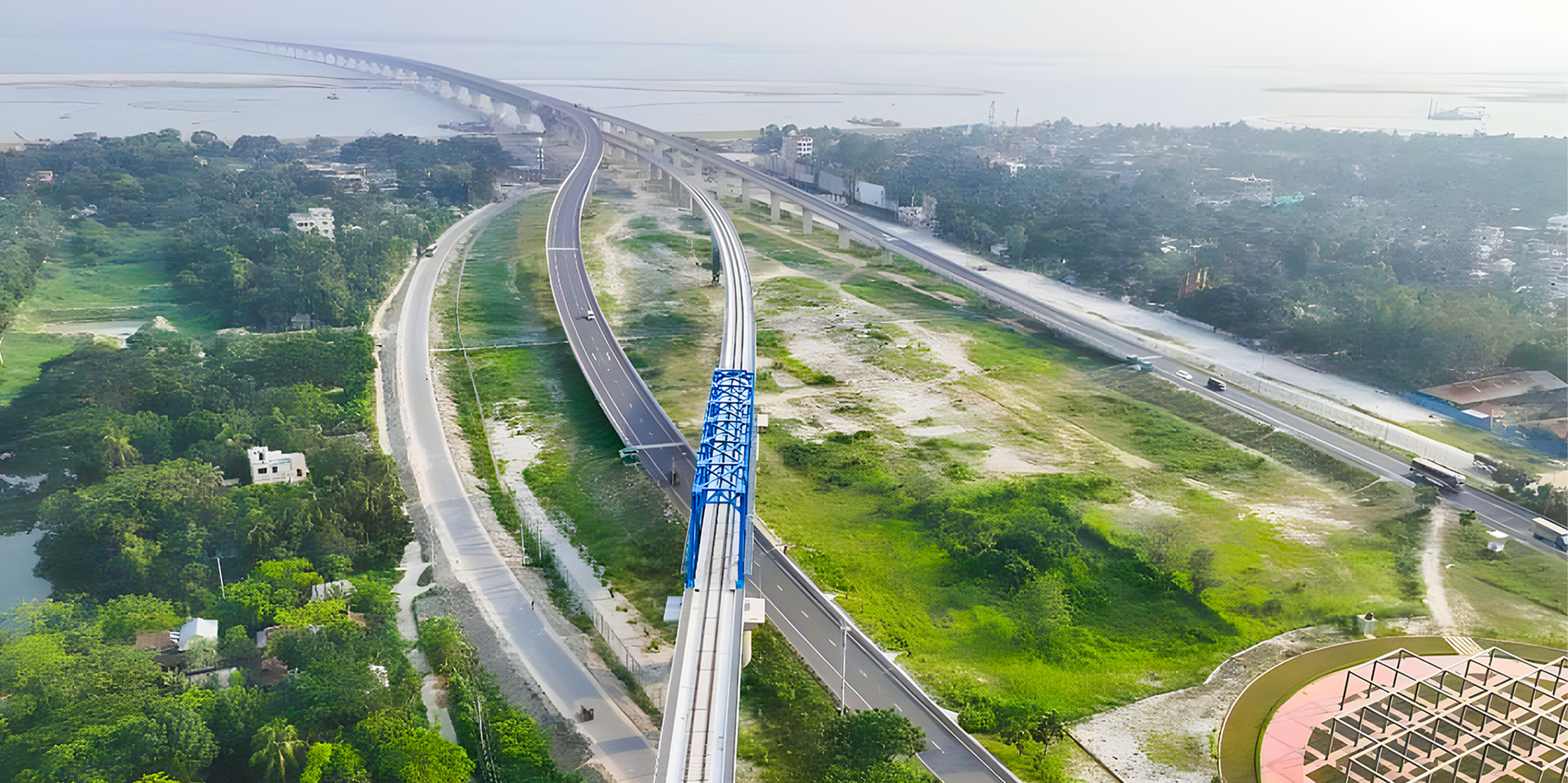
The project was conceived as a broader multimodal transport and utility corridor rather than a standalone bridge structure. In addition to the main crossing, the wider program incorporated approach infrastructure, bridge-end facilities, utility integration, foundation systems, river training works and complex construction logistics needed to deliver a permanent connection across the Padma River.
This integrated scope required careful planning across structural, geotechnical, hydrological and environmental disciplines, reflecting the complexity of delivering resilient transport infrastructure in one of the region’s most dynamic river environments.
Delivering the bridge required solutions for one of the world’s most dynamic and demanding river environments. Key technical challenges included achieving sufficient pile capacity to resist strong river currents and seismic forces, addressing limitations on pile length and pile numbers, managing riverbank erosion and bed level variation, and maintaining navigation throughout construction.
Environmental constraints were equally significant. The project required detailed assessment of impacts on forestry, agriculture, wildlife, aquatic ecosystems, biodiversity and air quality, while also managing the large volume of dredged material generated through river training works to avoid adverse effects on water quality and aquatic life.
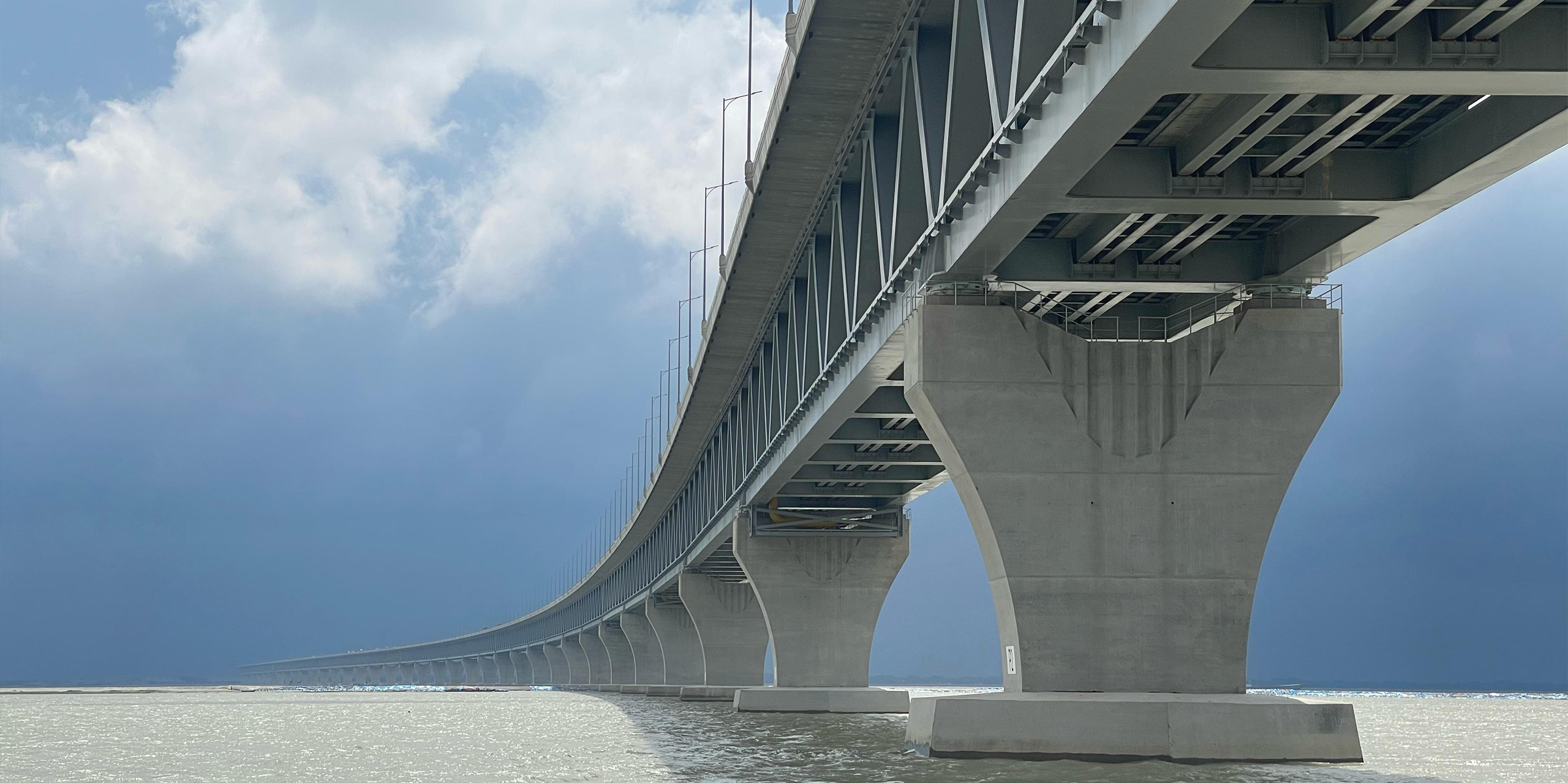
To address these constraints, the project adopted a series of adaptive engineering solutions. Inclined piles were introduced to improve resistance to lateral forces generated by river currents while also enhancing seismic performance. Where original foundation assumptions proved insufficient, additional piles were incorporated, with 22 piers revised from six to seven steel tubular driven piles. Base grouting and skin grouting technologies were also introduced to improve soil strength and pile bearing performance under highly demanding ground conditions.
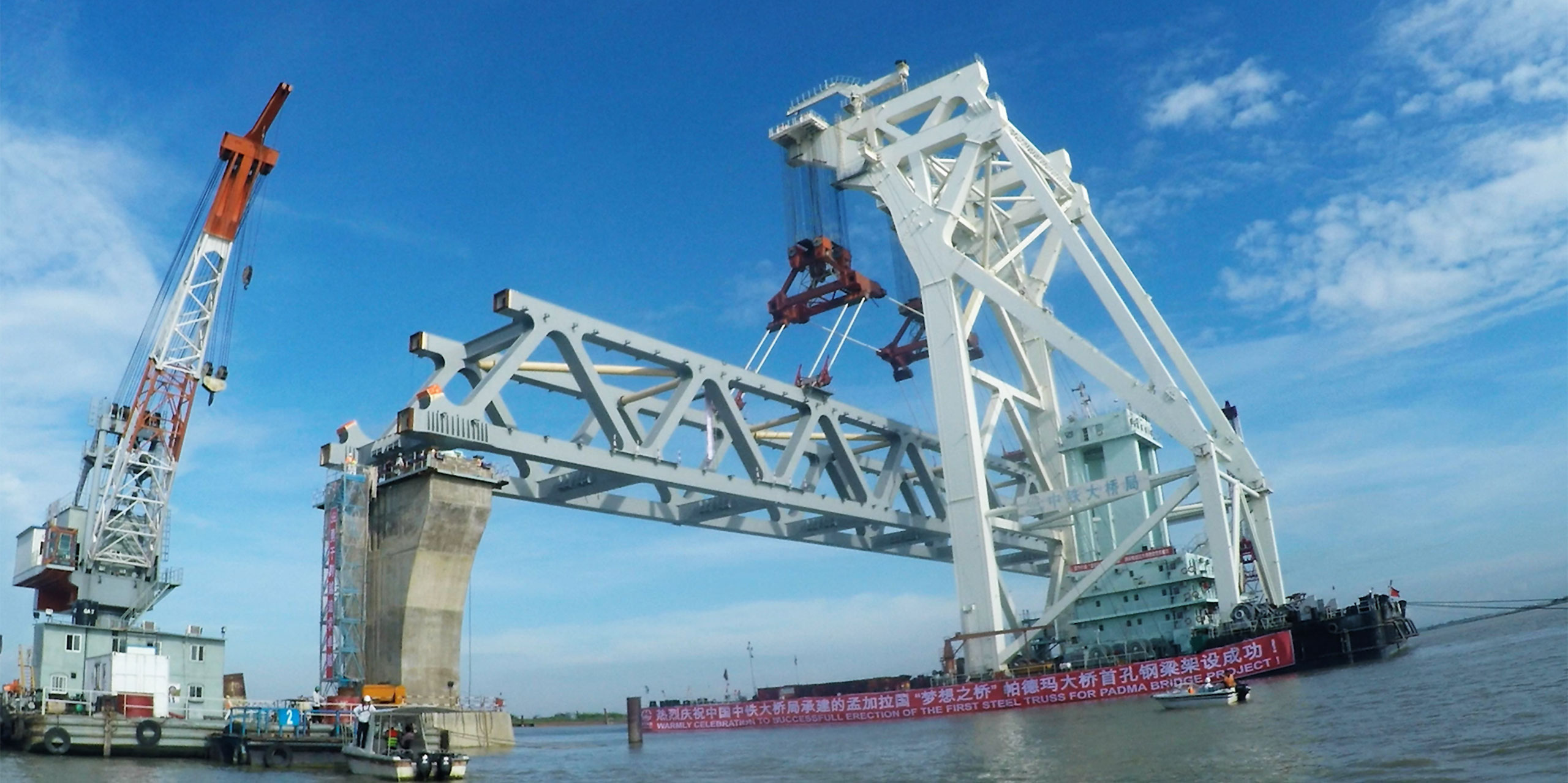
Extensive river training works were undertaken to stabilise the river system and protect the bridge over the long term. These works included approximately 1.8 km of revetment at the Mawa end and 11.3 km at the Janjira end, with horizontal protection extending approximately 170 m and 180 m respectively. During one phase of span installation, an artificial river channel was created through dredging to provide sufficient depth for the floating crane used to position steel truss spans, demonstrating the scale of logistical and engineering coordination required.
Environmental mitigation measures were embedded throughout the project lifecycle. Approximately 170,000 trees were planted across resettlement areas, approach roads and service zones to support habitat creation, biodiversity enhancement and land stabilisation. A comprehensive biodiversity management plan included monitoring of key species such as Hilsha fish and dolphins, together with underwater noise monitoring during pile driving to align with recognised international criteria. To manage dredged materials responsibly, 12 designated char land disposal sites were identified and actively monitored to minimise impacts on the river system.
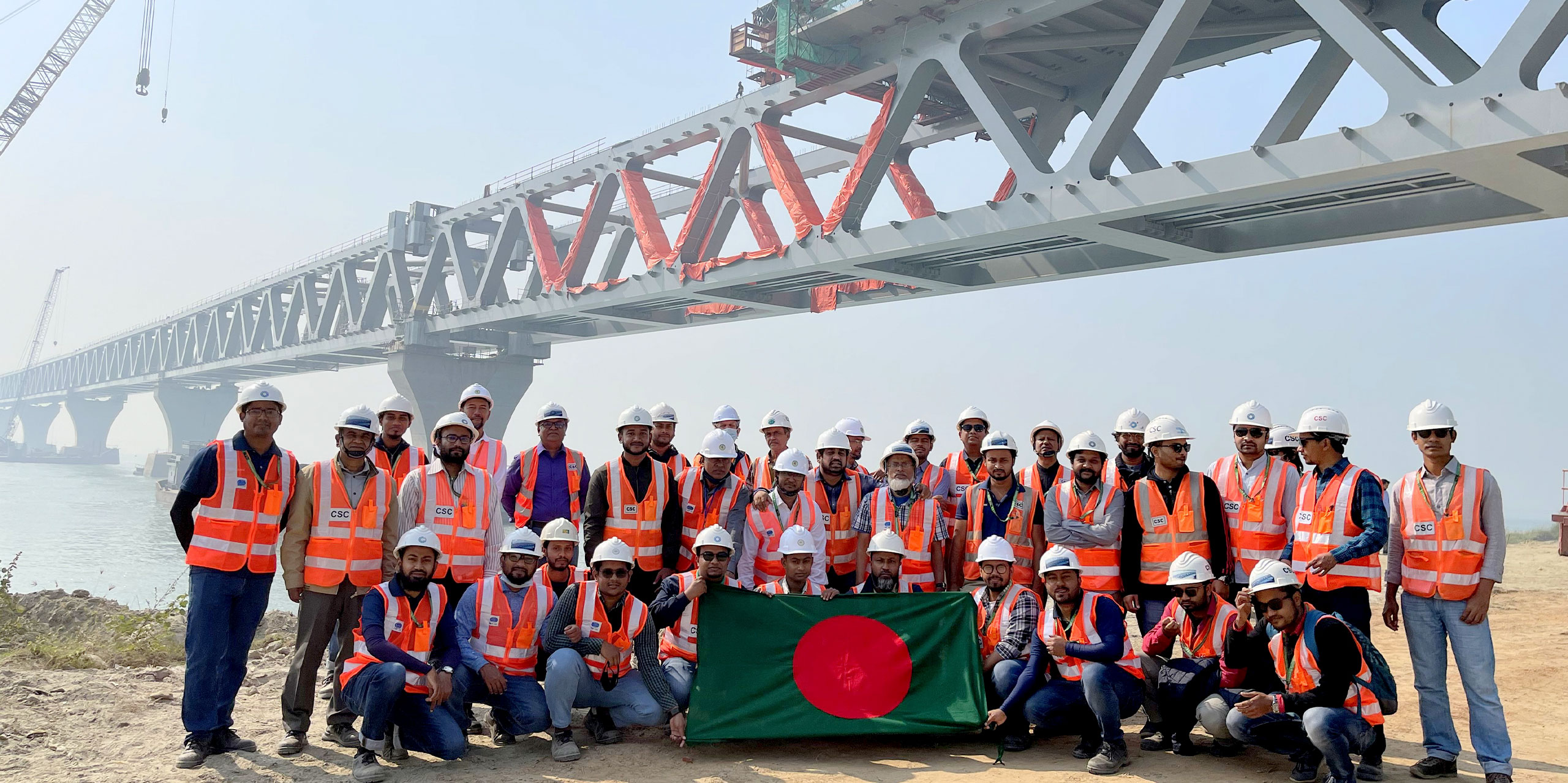
As Construction Supervision Consultant, SMEC, ACE Consultants and Korea Expressway Corporation supported the client through design review, construction oversight and coordination across critical work fronts including foundations, river training, dredging and environmental management.
This role was especially important during foundation redesign, river training implementation and span installation, where evolving site conditions required responsive technical decision-making, rigorous sequencing control and close alignment between design intent, construction methodology and environmental obligations.
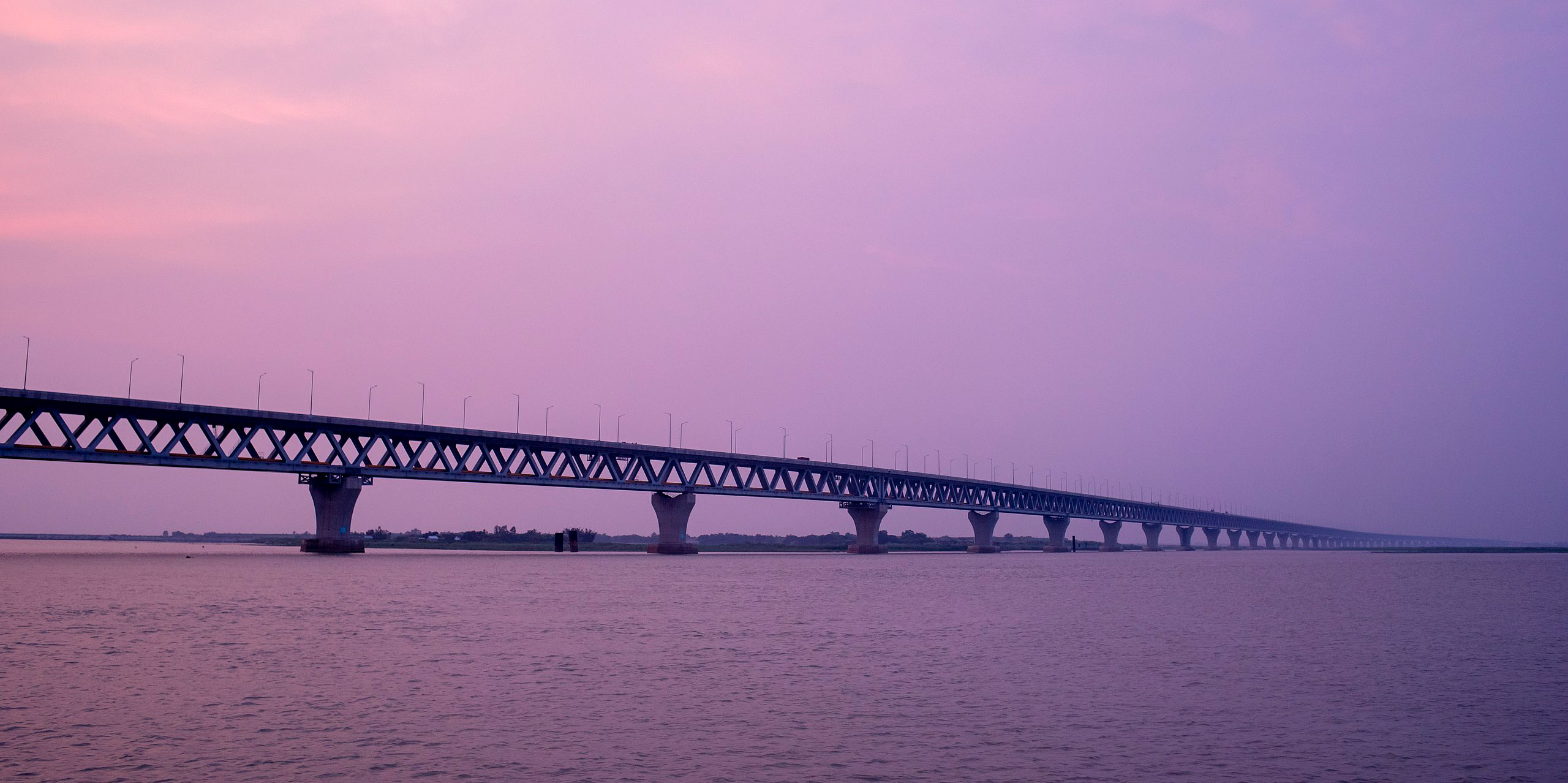
The Padma Multipurpose Bridge delivered several engineering milestones of global significance. It is recognised as the longest bridge over the Ganges River by both span and total length, and it incorporates the longest and deepest piling used for any bridge in the world, with tubular steel piles driven to approximately 122 m into the riverbed. The bridge also incorporates some of the largest bearings ever used on a bridge, each weighing approximately 10,500 metric tons, reflecting the exceptional structural and seismic demands of the project.
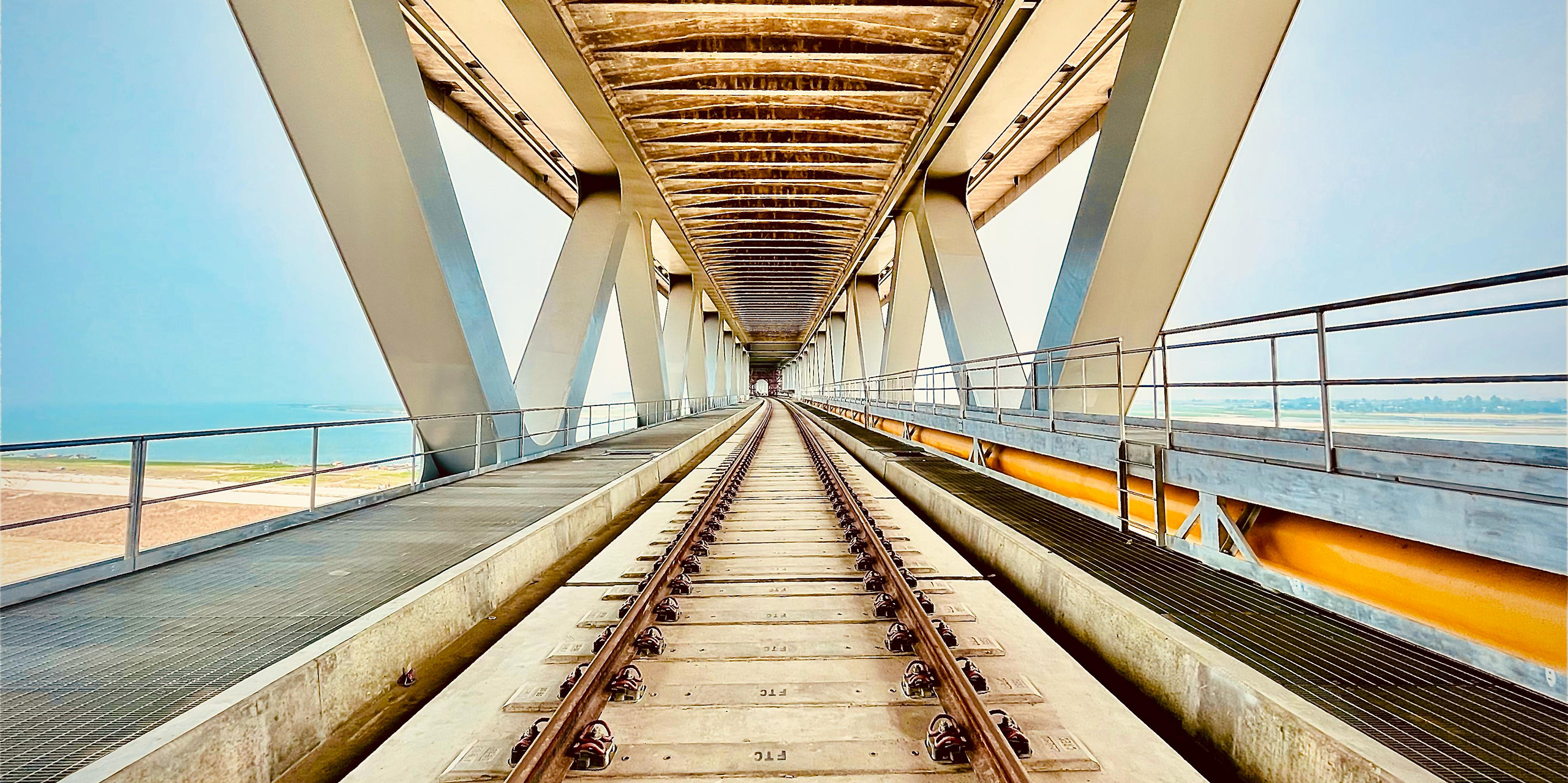
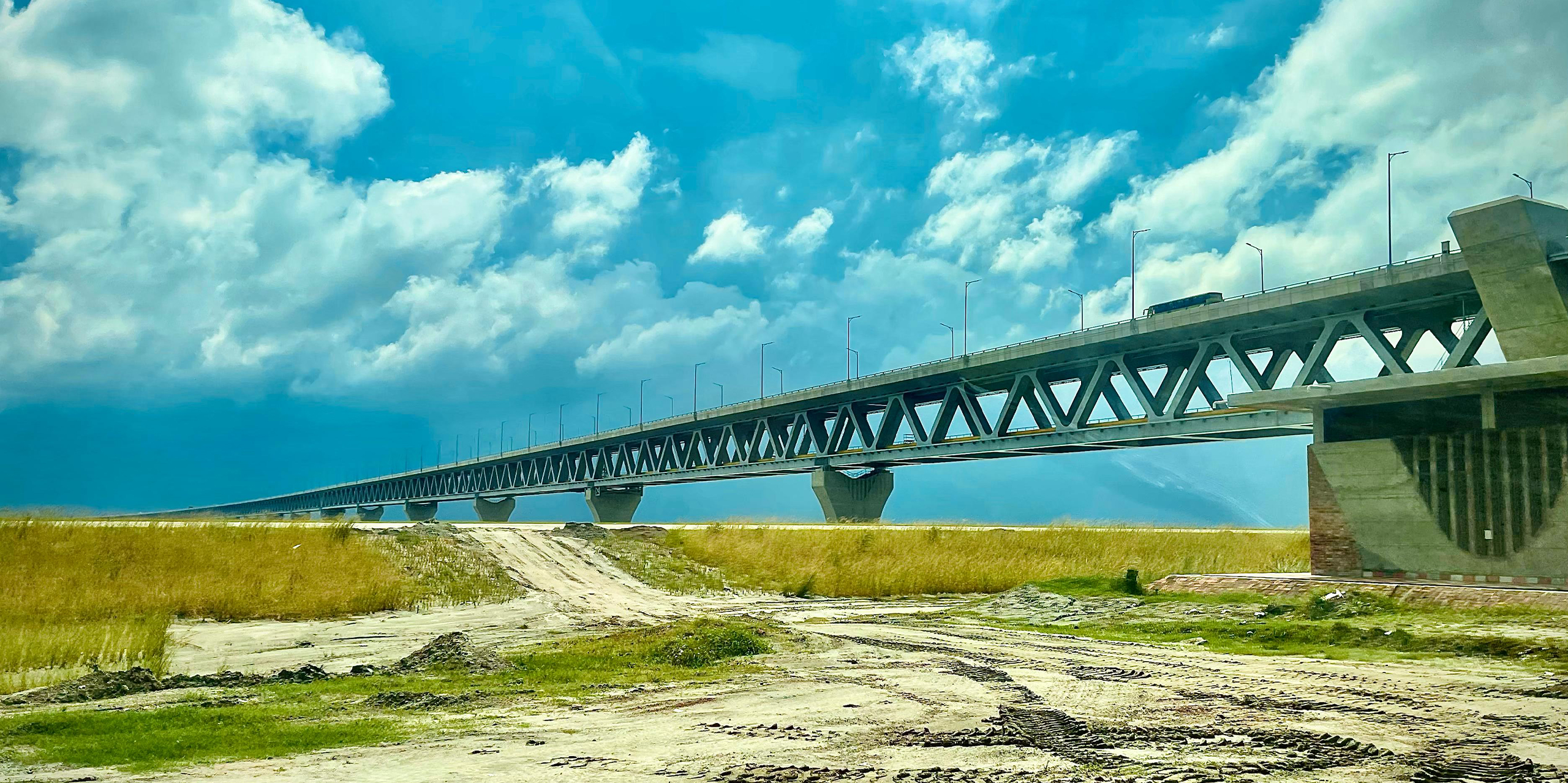
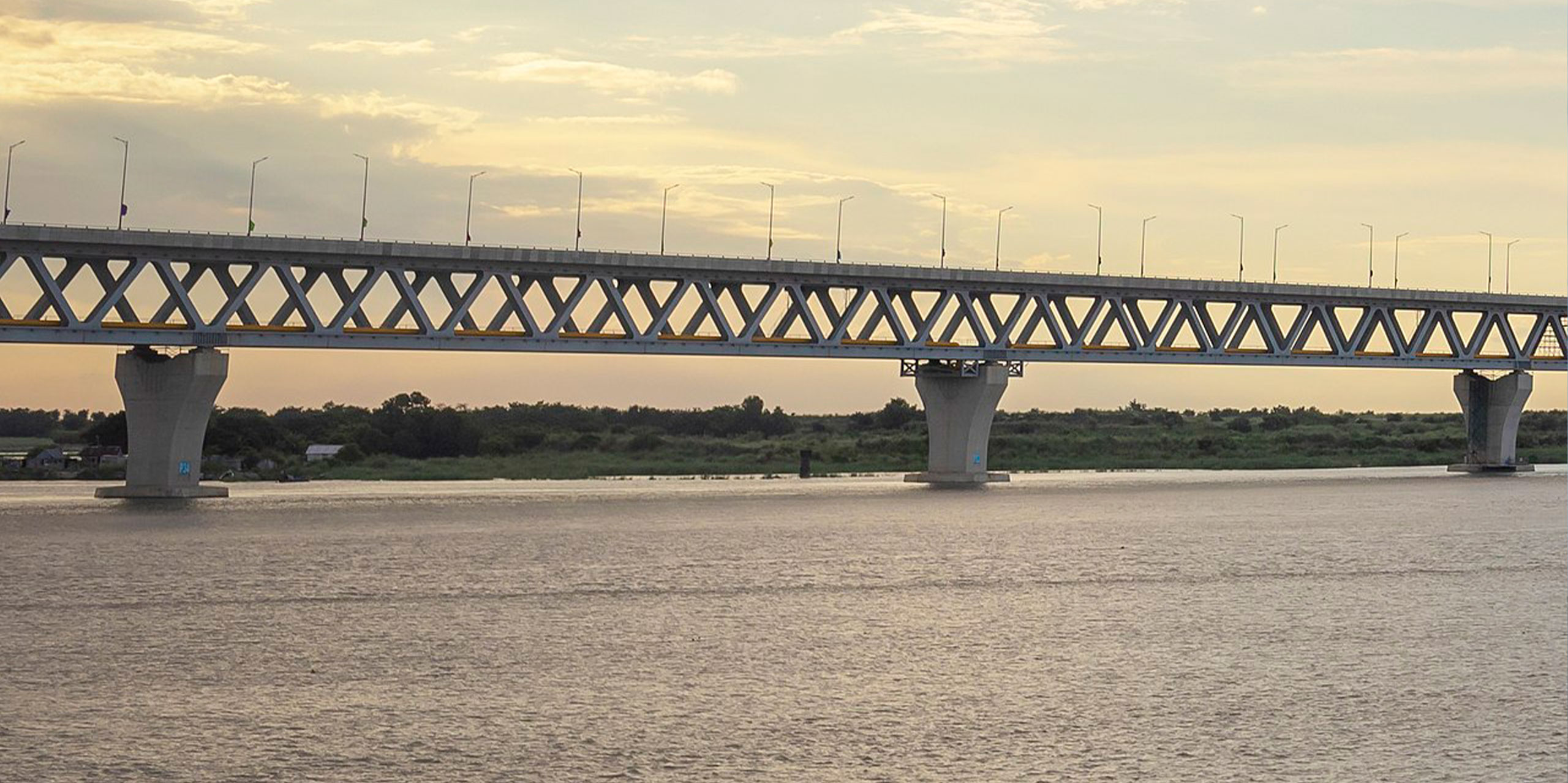
The project also established important national and industry firsts. It is the first all-welded, three-layer coating painted, super-thick steel double-deck truss bridge in Bangladesh developed in accordance with European standards. Construction required the use of a 3,600-tonne capacity floating crane to install 41 steel truss spans, each measuring 150 m in length, while hydraulic hammers with capacities of 1900 kJ, 2400 kJ and 3500 kJ were deployed to drive steel piles ranging from approximately 98 m to 122 m. Modern pre-tensioned Super-T girder technology was also adopted for the viaduct structures, demonstrating the project’s application of advanced bridge engineering methods at scale.
Innovation extended beyond the superstructure. Skin grouting and base grouting technologies were introduced to improve pile performance under difficult subsoil conditions, representing a first in bridge construction at this scale. These measures complemented the project’s broader foundation and river engineering strategy to safeguard long-term structural performance.
The bridge reduces road distance from Dhaka to major south-west destinations by 100 km or more and is expected to save around two hours for cars and buses and more than 10 hours for trucks, while also lowering transport and vehicle operating costs. By reducing detours, ferry waiting times and operating inefficiencies, the project also supports lower fuel use and associated emissions over time. [Source: Asian Development Bank Economic Analysis]
The bridge has also supported broader regional development by improving access to employment and growth centres, reducing remoteness for communities, increasing tourism potential and strengthening the enabling infrastructure needed for rural and regional development.
The Padma Multipurpose Bridge is more than a major transport crossing, it is a lasting investment in Bangladesh’s future. Through resilient design, technical innovation and integrated delivery, the project shows how infrastructure can create enduring value for communities, regions and the nation as a whole.