

Mount Ousley Interchange


From the early pioneers on the Snowy Mountains Hydroelectric Scheme, to our leaders and innovators of today, our people make us who we are.
Through our network of global specialists and by collaborating with local partners, we connect you with the best teams and capabilities to deliver highly innovative and sustainable solutions.
As an organisation we are continually evaluating ways we can better provide a safe, flexible, inclusive and respectful workplace for our people and clients.
People are at the heart of our organisation, we strive to create a flexible, diverse and inclusive environment that enables our people to thrive to their fullest potential.
Explore career opportunities
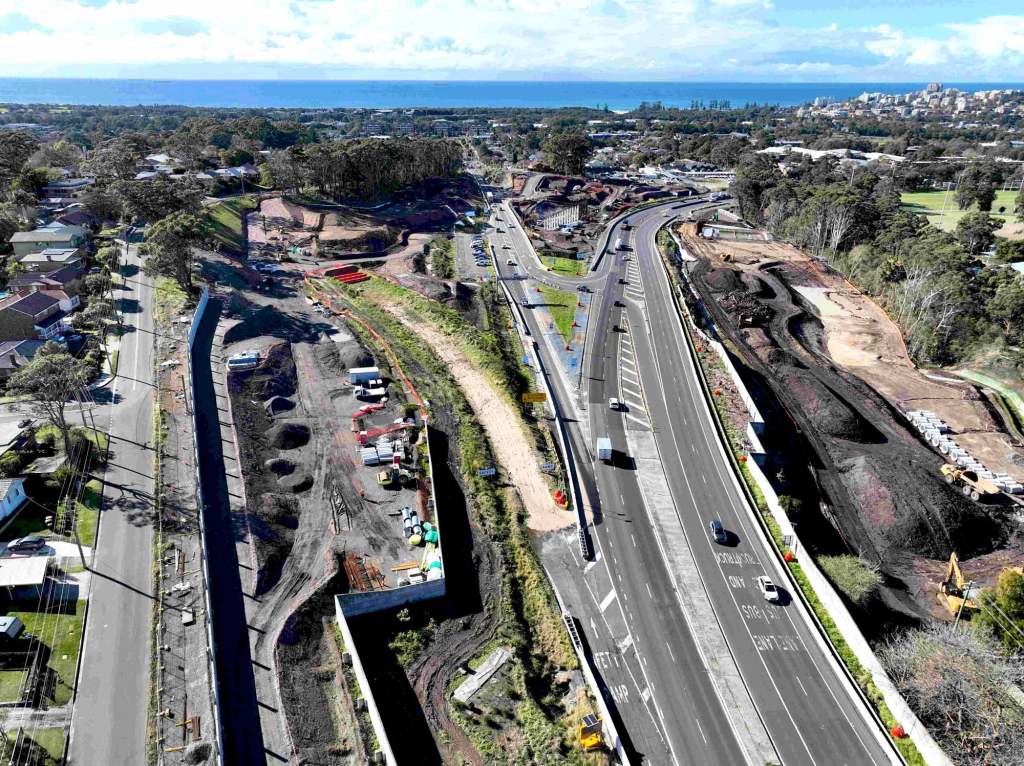
The Princes Motorway through Mount Ousley Road experiences heavy traffic congestion – more than 50,000 vehicles a day – especially during weekdays. The intersection of these roads was the only spot on the motorway where vehicles turning right had to give way to oncoming traffic – a unique feature resulting in safety concerns. Between July 2004 and June 2014, 34 crashes were recorded near this intersection, 25 of the crashes involving vehicles turning right out of Mount Ousley Road onto the Princes Motorway, demonstrating the urgent need for safety improvements.
The original reference design included twin roundabouts on either side of the motorway, as well as a major two-span bridge structure over the Princes Motorway. This concept would have involved significant disruption, as it required the undercutting of the existing Mount Ousley Road, which would have required closing Mount Ousley Road for an extended period and/or a series of traffic switches and temporary works.
The project is located at the base of a four-kilometre descent from the Illawarra Escarpment, where the risk of out-of-control heavy vehicles is notably high, with several accidents in recent years underscoring this danger. This created significant challenges during construction, with workers being exposed to live traffic while most of the works takes place on the outside of a major curve at the base of the descent. Ensuring safety during construction phase was a top priority, demanding thorough planning and continuous attention throughout both the design and construction processes.
The new intersection is being constructed within a brownfield environment, occupying the same footprint as the existing one. This required careful planning and coordination to stage the works and spatially separating design elements. The complexity was further increased by the presence of numerous live utility services running through the site, as well as the need to maintain both existing and upgraded intelligent transport systems (ITS) and key drainage features throughout construction. Balancing these challenges while ensuring uninterrupted traffic flow added to the overall complexity of the design process.
SMEC’s collaboration with Fulton Hogan significantly benefited the development of the concept design, ensuring that the design met standards and prioritised worker safety during construction. Together, the team explored separating work zones from live traffic, and navigated risk on site during construction. SMEC’s concept design introduced significant changes that evolved from the initial reference design. The changes included replacing the proposed eastern roundabout with dual traffic lights and reconfiguring the location of the southbound ramps. This innovation reduced the number of traffic stages from seven to three and refined the major bridge structure over the Princes Motorway from a two-span to a single span structure, reducing the overall pavement area of the project by 15 percent.
To safely manage this design change, the team are constructing a new heavy vehicle safety ramp ahead of major bridge works, providing safety measures against heavy vehicles veering off course during and after construction.
SMEC developed a sophisticated federated model that brought together every facet of the interchange design into a single, integrated visual platform. This advanced model served multiple purposes, including facilitating rapid clash detection, conducting thorough design reviews, and enabling a comprehensive constructability assessment.
By providing a 4D model of the Mount Ousley interchange, teams were able to collaborate more effectively, fostering a culture of innovation and problem-solving. This integration of design and construction processes helped to streamline communication, reduce errors, and ensure that all aspects of the project were carefully considered.
Beyond these technical advantages, the 4D model also played a crucial role in articulating the design to all project members, offering clear, interactive representation of the project. This clear communication ultimately enabled seamless coordination between design and construction efforts, contributing to a more efficient and successful project outcome.
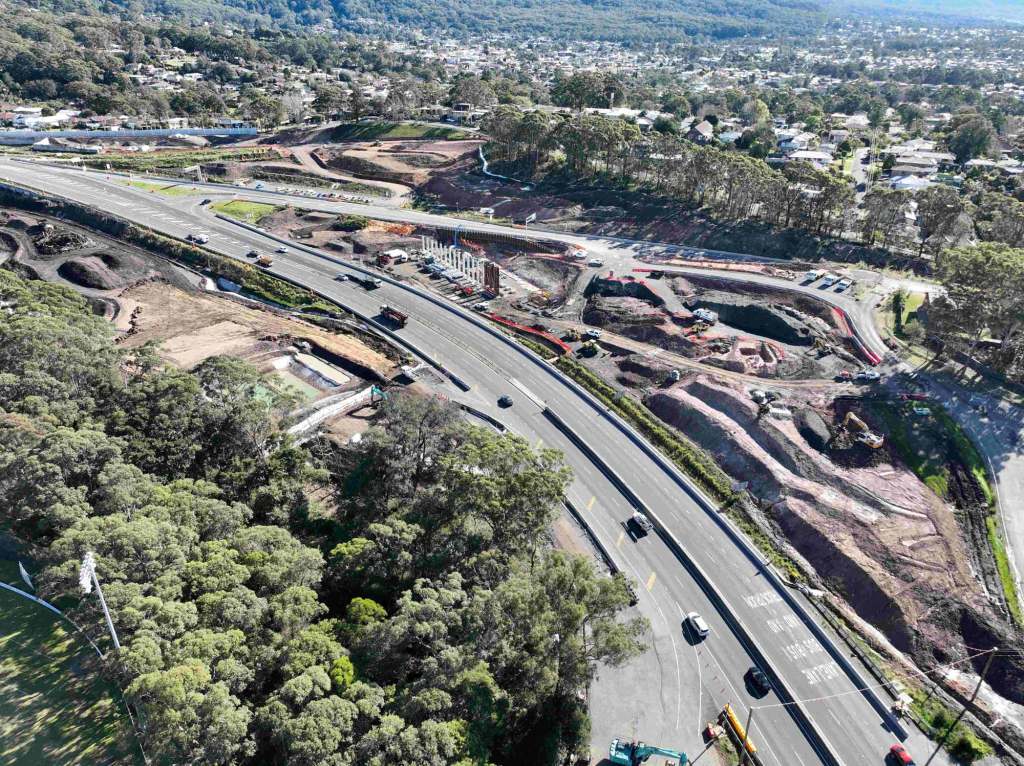
Wollongong, New South Wales’ third-largest city, is projected to grow to over 276,000 people by 2041. Currently, between 10,000 to 15,000 people commute daily from Wollongong to Sydney, highlighting the importance of the transport gateway between the two cities.
The new interchange is set to transform how commuters and freight travel along the Princes Motorway, with a significant impact on daily travel for the community. SMEC’s approach focused on integrating these priorities into a future-ready design that supports a user-centric transport network, demonstrating our commitment to providing innovative, lasting solutions for modern transportation challenges.
Project construction is expected to be completed in 2028, weather and site conditions permitting.