

Expertise


From the early pioneers on the Snowy Mountains Hydroelectric Scheme, to our leaders and innovators of today, our people make us who we are.
Through our network of global specialists and by collaborating with local partners, we connect you with the best teams and capabilities to deliver highly innovative and sustainable solutions.
As an organisation we are continually evaluating ways we can better provide a safe, flexible, inclusive and respectful workplace for our people and clients.
People are at the heart of our organisation, we strive to create a flexible, diverse and inclusive environment that enables our people to thrive to their fullest potential.
Explore career opportunities
What was once defined by discrete assets is now shaped by integrated, data-enabled systems that must respond to accelerating urbanisation, climate pressures, and evolving stakeholder expectations.
Across SMEC and the SJ Group, this shift is already evident. Infrastructure is no longer conceived as discrete assets, but as integrated, data-enabled systems designed to perform across entire networks. Transport systems are evolving from individual assets to integrated, data-enabled systems shaped by sustainability imperatives, digital engineering capability, and long-term resilience requirements.
Intermodal thinking is therefore redefining how infrastructure is planned, designed, and delivered. The challenge is no longer simply project delivery on time and budget, but enabling adaptive, resilient and low-carbon infrastructure systems that perform reliably across entire transport networks.
Global infrastructure demand continues to accelerate at an unprecedented scale. McKinsey (2021) estimates that US$106 trillion in infrastructure investment will be required globally through 2040, with transport and logistics representing the largest share at approximately US$26 trillion. The investment challenge is being driven by ageing assets, rapid urbanisation, technological change and the need for new and upgraded infrastructure to support future economic growth.
Yet the challenge extends beyond building more infrastructure. Transport networks are increasingly interconnected, meaning disruption to one asset, corridor or mode can have consequences across the wider system. The International Transport Forum identifies climate change, geopolitical tensions and energy security among the disruptions affecting transport systems and argues that resilience needs to be embedded into long-term planning, appraisal and policy.
This changes what infrastructure needs to deliver. Capacity and connectivity must increasingly be considered alongside reliability, adaptability and whole-of-life performance. The OECD similarly notes that decisions made today about the design, location and operation of infrastructure will determine how resilient networks are to future climate conditions, including rising temperatures and increasing flood risk.
At the same time, technology is changing how this complexity can be managed. Digital engineering, data-driven modelling and connected information environments provide a means of understanding infrastructure as part of a broader system rather than as individual assets. For transport, this creates the opportunity to bring together information across road, rail, ports and maritime, geotechnics and structures, enabling teams to better understand interfaces, test scenarios and consider future network requirements earlier in the project lifecycle.
This shift is underpinned by four dominant global drivers:
The shift is therefore not simply towards more infrastructure or more technology, but towards infrastructure that is better connected, better informed and designed to continue performing as conditions change. This is where digital engineering and intermodal thinking converge: connecting disciplines, assets and transport modes so that decisions made at project level ultimately contribute to the performance and resilience of the wider network.
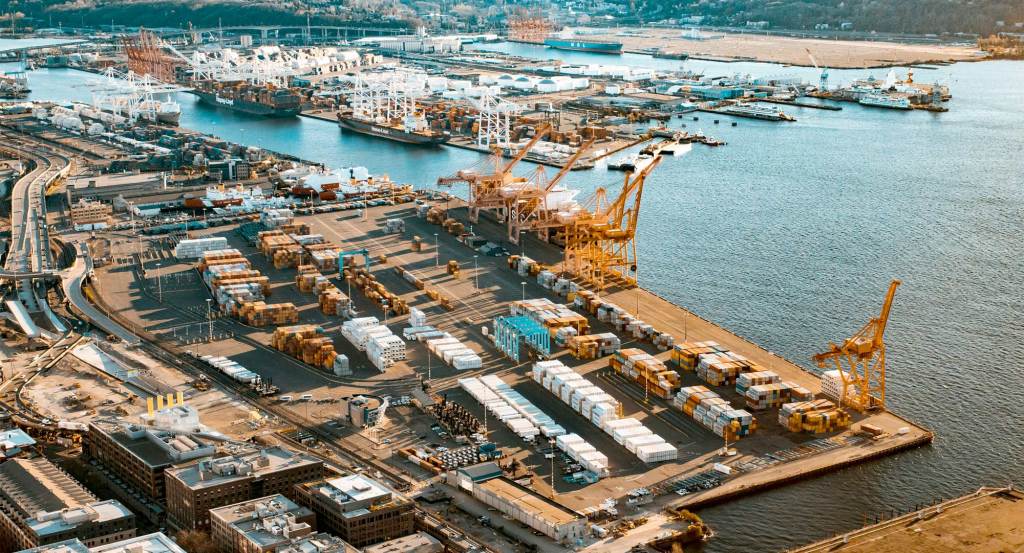
Intermodal thinking is changing how transport infrastructure is planned, designed and delivered. The focus is shifting from isolated assets to integrated, multi-modal networks. Industry analysis shows that transport planning prioritises rail–road integration, port connectivity, multi-corridor optimisation and network redundancy as core design principles rather than optional enhancements (International Transport Forum, 2021).
This is reinforced by freight and transport decarbonisation outcomes, where shifting freight from road to rail is one of the most effective levers available; capable of up to 16 times lower carbon emissions per tonne-kilometre compared to road transport. Intermodal infrastructure provides critical interfaces required to enable this modal shift at scale. Systems approaches are particularly evident in the integration of ports and maritime infrastructure with landside transport networks, where performance depends on seamless coordination between road, rail, and terminal operations.
Across SMEC’s transport portfolio, intermodal principles underpin delivery across freight, metro, and major corridor projects. Whether through rail–road integration, tunnel interfaces, or long-term corridor staging, outcomes depend on how effectively system interfaces are designed and managed. Intermodal connectivity is no longer an enhancement—it is a core design requirement, supported by multidisciplinary expertise across transport planning, civil engineering, geotechnics, rail, roads, ports and digital engineering.
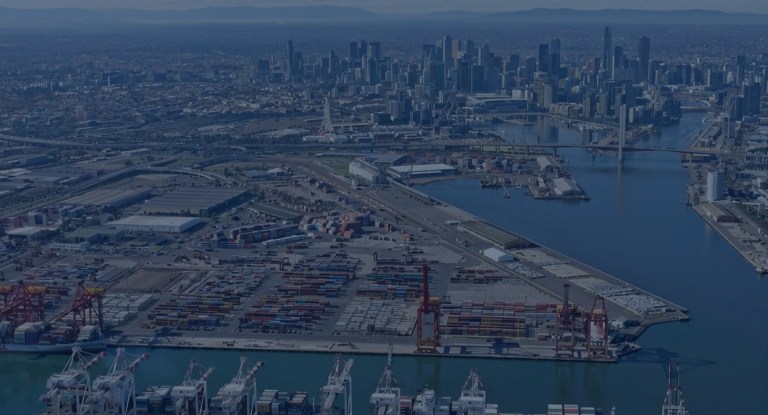
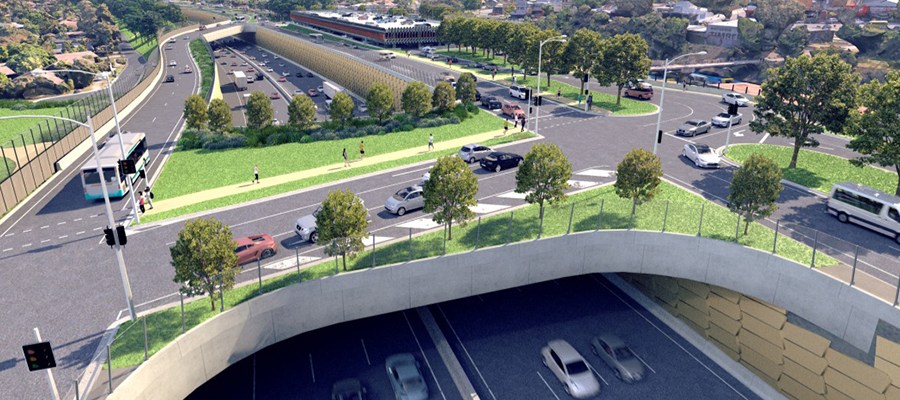 North East Link, Melbourne Australia
SMEC is applying systems-based and intermodal thinking across some of Australia’s largest and most complex transport infrastructure programs.
Projects such as the North East Link (Victoria), River Torrens to Darlington (South Australia) and Sydney Metro (NSW) demonstrate how integrated transport planning is being applied in real delivery environments, linking tunnels, interchanges, rail systems, active transport networks, and arterial road networks into coordinated infrastructure outcomes that improve network efficiency and urban connectivity.
Importantly, these projects highlight how complex corridor planning requires the increasing need for early-stage integration across disciplines, stakeholders, and long-term operational requirements. Rather than being addressed sequentially, considerations such as staging, constructability, and interface management are now embedded from the outset of design.
Beyond metropolitan transport corridors, SMEC’s experience across freight, ports, and maritime infrastructure illustrates the importance of integrated system design. Here, infrastructure performance depends on how effectively interfaces between road, rail, and terminal systems are planned and coordinated to support long-term capacity and resilience.
Together, these programs reflect a broader industry transition—from delivering individual assets to designing connected infrastructure systems that generate sustained value for communities, economies, and transport networks.
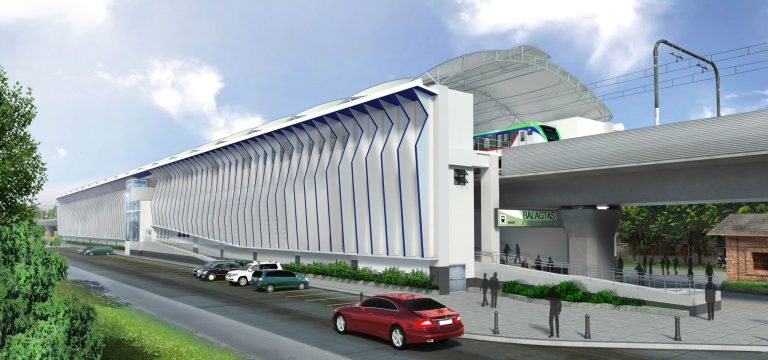
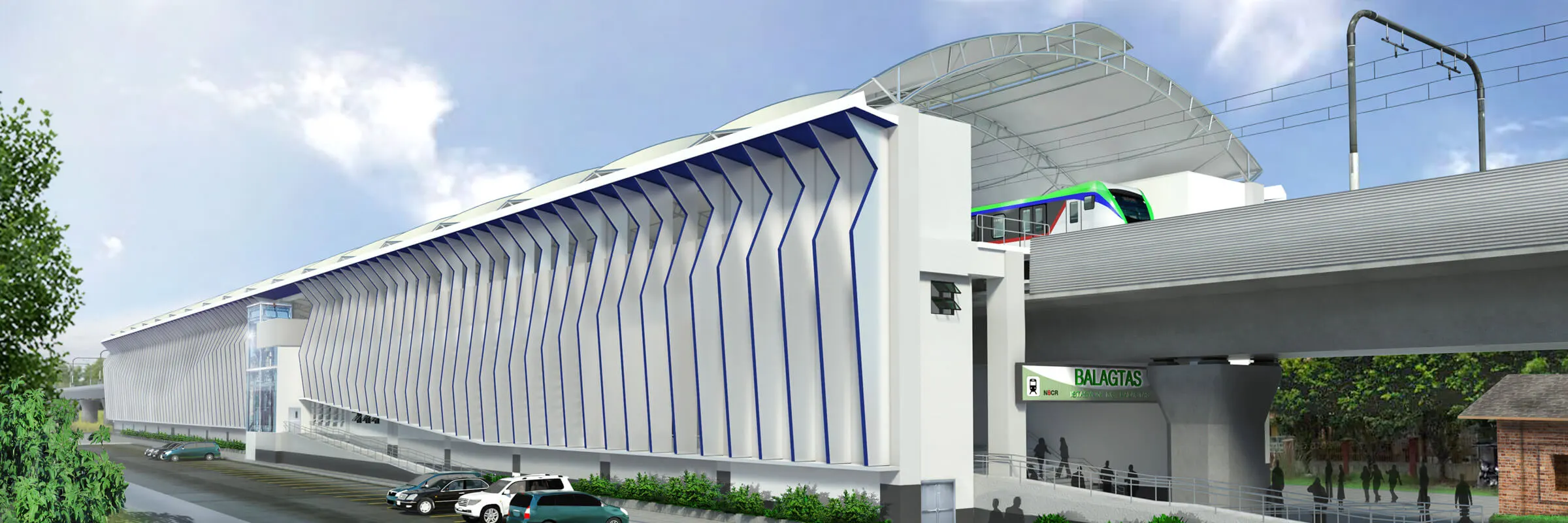
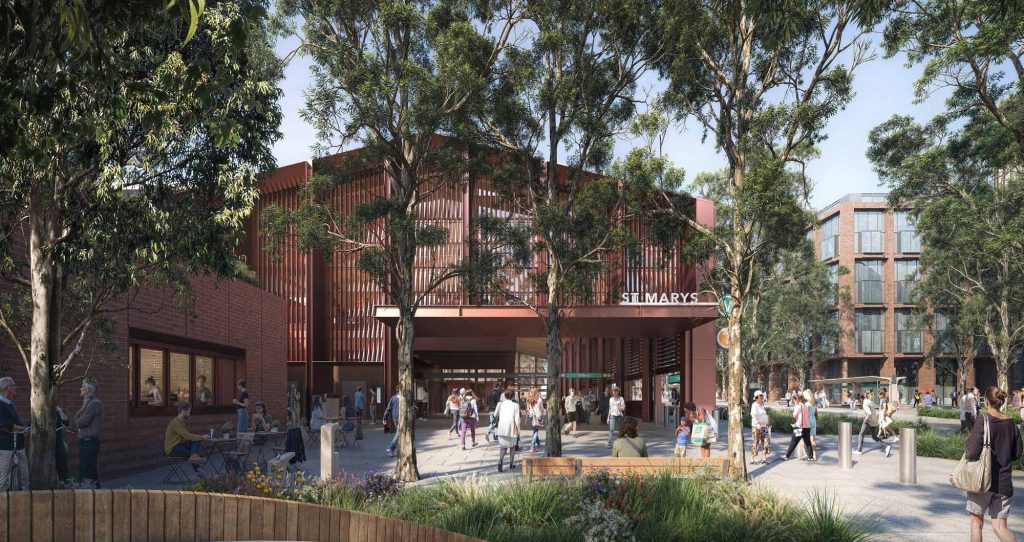 Sydney Metro, Stations, Systems, Trains, Operations and Maintenance, Sydney, Australia
Freight and port infrastructure provides some of the clearest evidence of intermodal thinking in practice.
At the Beveridge Intermodal Precinct (BIP) in Victoria, Australia, SMEC has supported the project from early feasibility and master planning through to detailed design via design novation process, enabling our team to execute and engineer our concepts. Our multidisciplinary expertise enables us to develop the terminal by coordinating rail infrastructure, civil infrastructure, water management, utilities and geotechnical aspects. Designed to accommodate double-stacked 1,800-metre freight trains and process significant freight volumes, the facility enables the efficient transfer of freight between rail and road networks—illustrating how intermodal infrastructure operates as a system, not a standalone asset.
BIP is not just a terminal design; it is a system integration exercise. The project demonstrates how intermodal infrastructure depends on the alignment of rail operations, road access, yard configuration, and long-term capacity planning to function effectively as part of a broader transport network rather than a standalone asset.
This matters for those who build and those responsible for turning intermodal strategy into asset performance. For contractors, early integration of road, rail, terminal, utility and staging interfaces reduces delivery risk, improves constructability and limits late design change. For operators, it supports long-term reliability, capacity and maintainability across the full operating life of the asset. Integrated design is therefore not simply about connecting modes; it is about improving confidence in how complex assets are built, commissioned and operated.
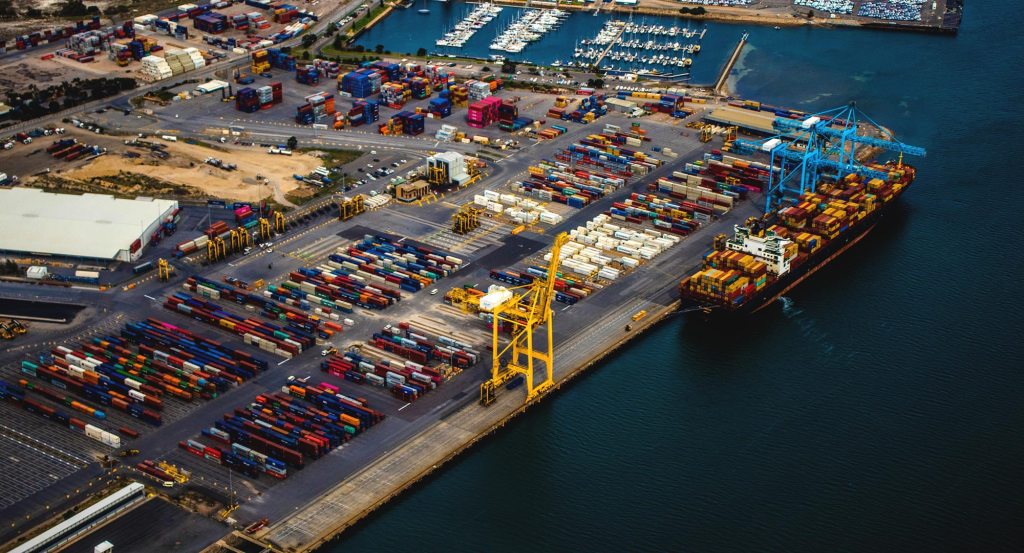
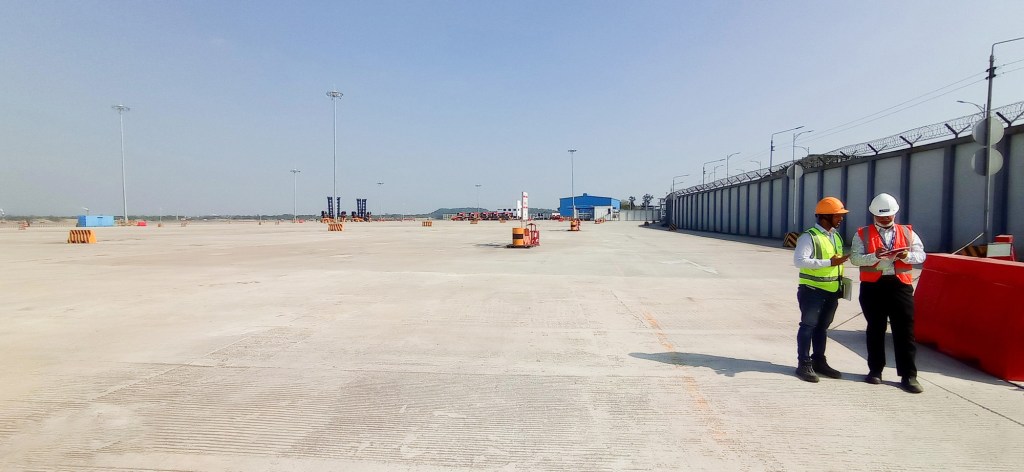 Patenga Container Terminal, Pakistan
Similarly, this systems-based approach is also reflected across other major projects such as the Patenga Container Terminal, Manila NorthPort Wharves, Port of Townsville – Future Intermodal Facility, Port of Melbourne Webb Dock Upgrade, Inland Rail and Murray Basin Rail Project, which demonstrate how port infrastructure, inland corridors and landside transport networks must be planned as a connected system. These projects require careful consideration of aligning terminal operations and capacity, rail interfaces, and road access while managing staging complexity and interface risk across multiple modes.
Across the ports and maritime sector, integrated planning is becoming essential to unlocking network-wide performance. SMEC’s experience spans port master planning, terminal infrastructure, and transport interface planning, supporting stronger connections between maritime operations and road and rail networks.
As ports evolve into critical nodes within interconnected transport systems, successful infrastructure planning depends on seamless integration across modes, enabling more resilient supply chains, improved capacity, and greater long-term economic value.
Intermodal infrastructure is no longer a specialist consideration—it is becoming the foundation of modern transport planning.
As cities grow, trade networks evolve, and sustainability expectations increase, infrastructure must be designed as part of an integrated system that balances connectivity, resilience, and long-term performance.
For transport leaders, the opportunity extends beyond delivering individual assets. It lies in creating connected infrastructure networks that support economic growth, enable decarbonisation, and adapt to future mobility demands. The organisations that succeed will be those that embrace systems thinking, leveraging digital capability and integrated design to unlock greater value across the entire transport ecosystem.
In the next article in this series, we explore how digital engineering is enabling this transformation—providing the data, tools, and intelligence needed to plan, design, and deliver increasingly complex infrastructure systems.
Ports worldwide handle over 80% of global trade by volume, with maritime infrastructure increasingly under pressure to accommodate growing vessel sizes and ageing assets (UNCTAD, 2023). Reflecting this rapid change, the global smart port market is projected to reach US $9.1 billion by 2027, driven by investments in IoT, AI, automation, and sustainability transforming port operations (Allied Market Research, 2023).
Across the ports sector, operators are looking for practical ways to get more from existing infrastructure while preparing for future demand.
SMEC’s long presence in Southeast Asia and the Pacific Region is wide-ranging, having been involved in the delivery of many infrastructure projects in the hydropower, energy, water and wastewater, road, rail, and port sectors. Across all sectors, the push for sustainability has become fundamental.