
Expertise


From the early pioneers on the Snowy Mountains Hydroelectric Scheme, to our leaders and innovators of today, our people make us who we are.
Through our network of global specialists and by collaborating with local partners, we connect you with the best teams and capabilities to deliver highly innovative and sustainable solutions.
As an organisation we are continually evaluating ways we can better provide a safe, flexible, inclusive and respectful workplace for our people and clients.
People are at the heart of our organisation, we strive to create a flexible, diverse and inclusive environment that enables our people to thrive to their fullest potential.
Explore career opportunities
These conditions are increasingly intersecting with urban expansion, amplifying the scale of damage when fires occur. Australia’s Black Summer (2019–2020) saw bushfires burn over 24 million hectares, destroying thousands of homes and severely damaging critical services and transport infrastructure. Similar destruction was seen in the United States, where California’s fire seasons from 2017 to 2021 repeatedly devastated entire towns and severed key transport corridors across the state. Southern Europe experienced record-breaking wildfires in 2017, 2018, and again in 2025, with similar impacts observed. And the story continues across the globe.
What is emerging worldwide is the convergence of escalating fire risk, expanding urban development, climate change, and increasingly fragile ecosystems. This convergence is driving the need to rethink how we design and maintain infrastructure – both old and new. To address these risks, SMEC teams are using advanced engineering analysis to identify vulnerabilities in infrastructure assets—whether through material behaviour, environmental exposure, or network dependencies—and designing solutions that help strengthen the durability and reliability of critical infrastructure.
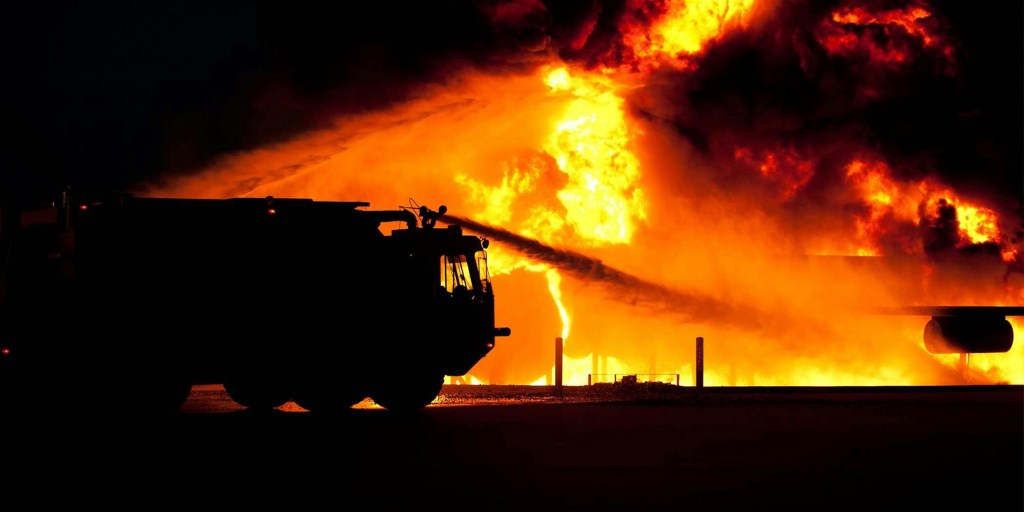
Designing tunnels to perform under fire is one of the most complex challenges in underground engineering. Unlike buildings, bridges or highways, tunnels are long, enclosed systems where heat cannot escape easily, smoke is influenced by ventilation, and vehicle fuel loads can produce extreme temperatures within minutes. Throughout a fire event, tunnel linings must contend with this complex set of conditions to remain structurally sound, continuing to support both the ground above and the internal forces within the tunnel.
History has shown what is at stake. Major tunnel fires in Europe, including the Mont Blanc Tunnel (1999) and Gotthard Road Tunnel (2001), demonstrated how rapidly fire conditions can escalate in confined transport corridors and how profoundly these events can disrupt regional and international networks. These lessons continue to shape how we design for resilience today.
In transport tunnels, where concrete linings provide both structural support and fire separation, resilience begins with a clear understanding of how heat interacts with concrete. Concrete does not heat evenly. Its thermal response depends on material properties such as conductivity, moisture content, and specific heat, which together determine how fast and how deeply heat travels into the lining.
While temperature differences near the surface may appear modest, they become critical deeper within the section. At depths of around 100 mm, realistic variations in thermal properties can lead to temperature differences of up to 25%. This directly influences how much of the lining is exposed to damaging temperature ranges, and how much structural capacity remains.
Equally important is the nature of the fire itself. Tunnel design takes into account a range of fire curve models, which describe how fire temperatures rise and evolve over time under different scenarios. At exposed surfaces, the selected fire curve governs applied thermal demand and strongly influences the risk of spalling. Severe tunnel fire curves impose significantly higher and more sustained temperatures than standard building curves, increasing thermal penetration into the lining and the extent of damage that must be addressed in design.
A tunnel’s geometry plays a defining role in how it responds to fire. Along most of the alignment, linings are exposed on a single face. However, at corners, corbels, cross passages, and internal walls, concrete may be exposed on two faces at once.
These localised conditions experience much more severe thermal attack. Even at shallow depths, two face exposure can nearly double concrete temperatures compared to single face exposure, significantly increasing the risk of spalling and strength loss. While curved and flat surfaces behave similarly under one face exposure, it is the combination of geometry and two face exposure that creates the most critical design conditions.
The true test of a tunnel’s resilience during a fire is not only its immediate structural response, but also how quickly and safely it can be restored to operation. Stability, safe inspection, and efficient recovery are the key factors that influence public safety, operational continuity, and the long-term reliability of vital infrastructure following an incident.
Understanding what drives these outcomes is fundamental to every engineering decision. A thorough grasp of these intricacies underpins the choices that keep tunnels safe, serviceable, and resilient in the face of extreme events:
Fire-resilient tunnel design is not defined by a single temperature or safety factor. It is shaped by the interaction of fire behaviour, material properties, geometry, exposure conditions, and spalling, and how these factors influence the effective structural section.
By simplifying this complexity through rigorous analysis and multidisciplinary expertise, tunnel owners and designers can move beyond compliance. The result is infrastructure that protects people, safeguards critical connections, and performs when it matters most, engineering positive change, even under extreme conditions.
Engineering professionals play a uniquely critical role in future-proofing transport networks. We understand that the consequences of infrastructure failure can go far beyond inconvenience. Communities can be impacted in a range of ways:
We are dedicated to designing solutions to protect against all of the above possible impacts and worst-case scenarios.
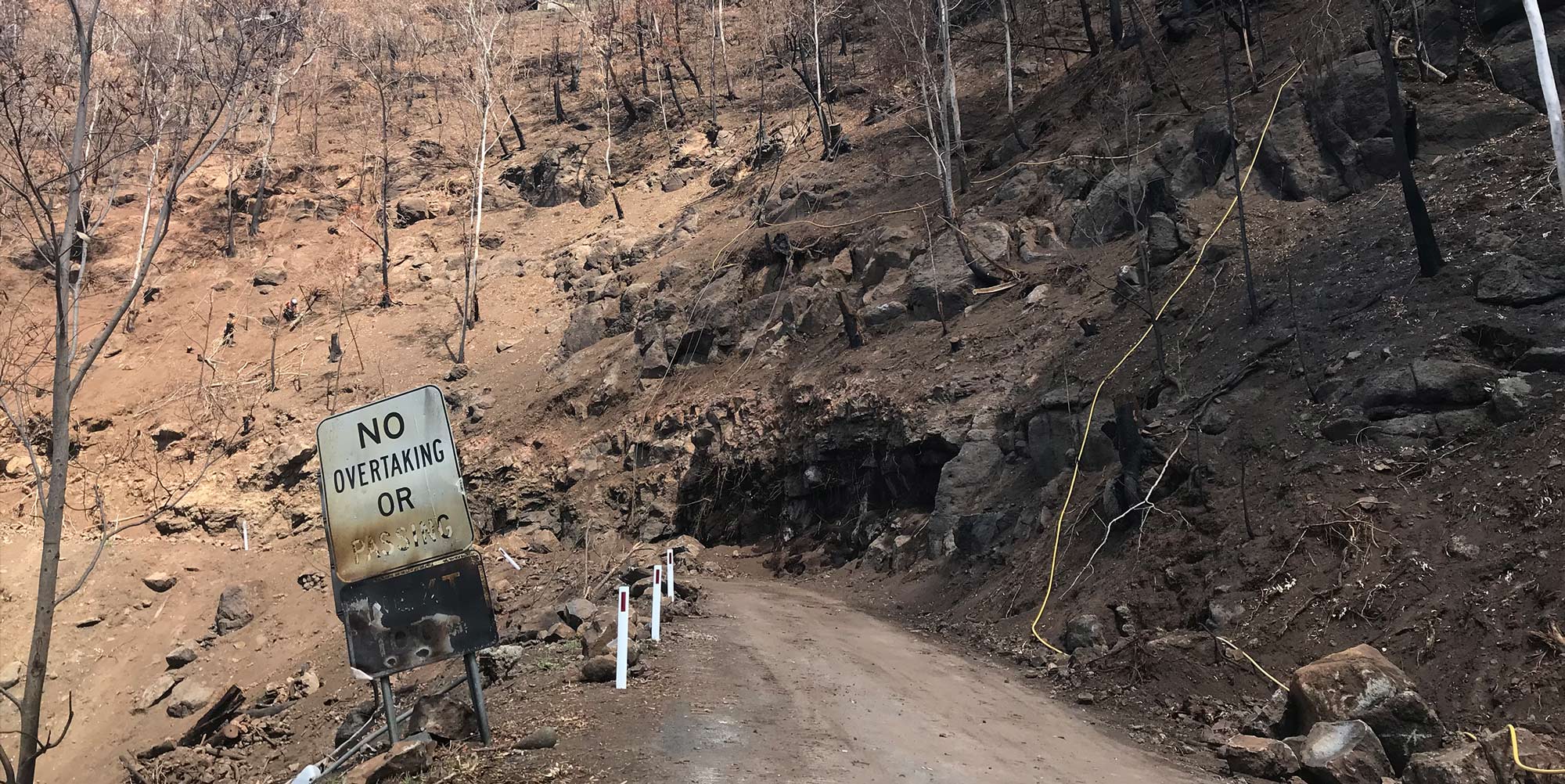
The 2019 bushfires in Lamington National Park, Australia are an example of how fire can disrupt not only physical assets but entire access networks. Fire destroyed the heritage-listed Binna Burra Lodge and severely damaged the area’s only access road. Extreme heat fractured rock faces, burnt trees from the inside out, and stripped vegetation, destabilising slopes along a narrow, winding mountain corridor. The situation deteriorated in the following months, with heavy rain re-routing drainage across desiccated ground, winds felling compromised trees, and successive landslips exposing new hazards.
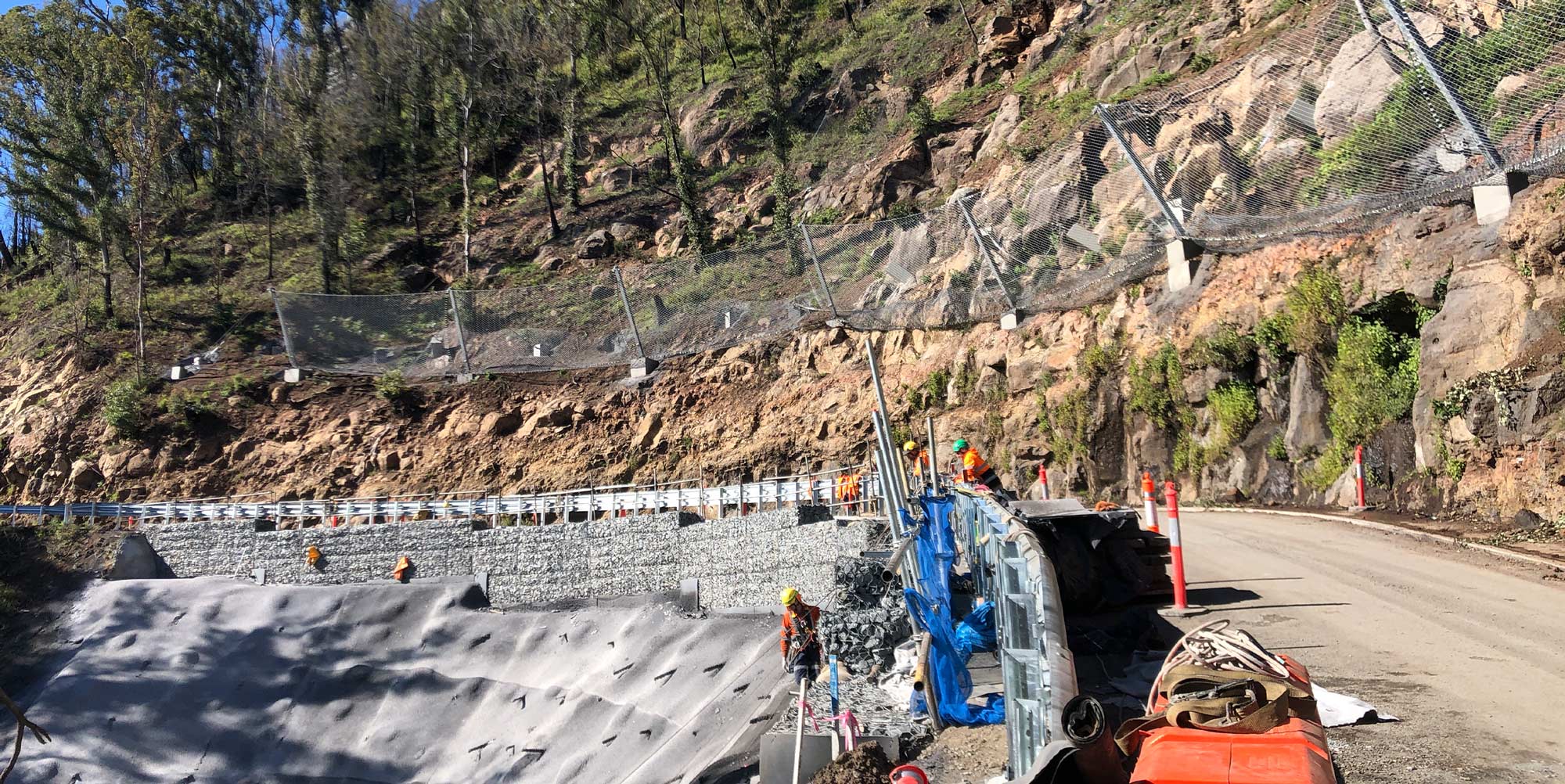
To help restore connectivity, SMEC provided design services for the Queensland Department of Transport and Main Roads’ Binna Burra Road remediation project. The project scope scaled rapidly, including a total of 20 remediated sites by project’s end. A fluid design program allowed construction and design to proceed in parallel. Early site intelligence revealed invisible risks—fractured boulders ready to cleave, hollowed trunks with compromised strength, and unstable scree fields—that demanded strengthened safety briefings and updated access protocols for rope technicians. With the corridor constrained to a single carriageway and multiple rebuild crews requiring passage to the lodge, sequencing and traffic management became integral design inputs rather than downstream considerations.
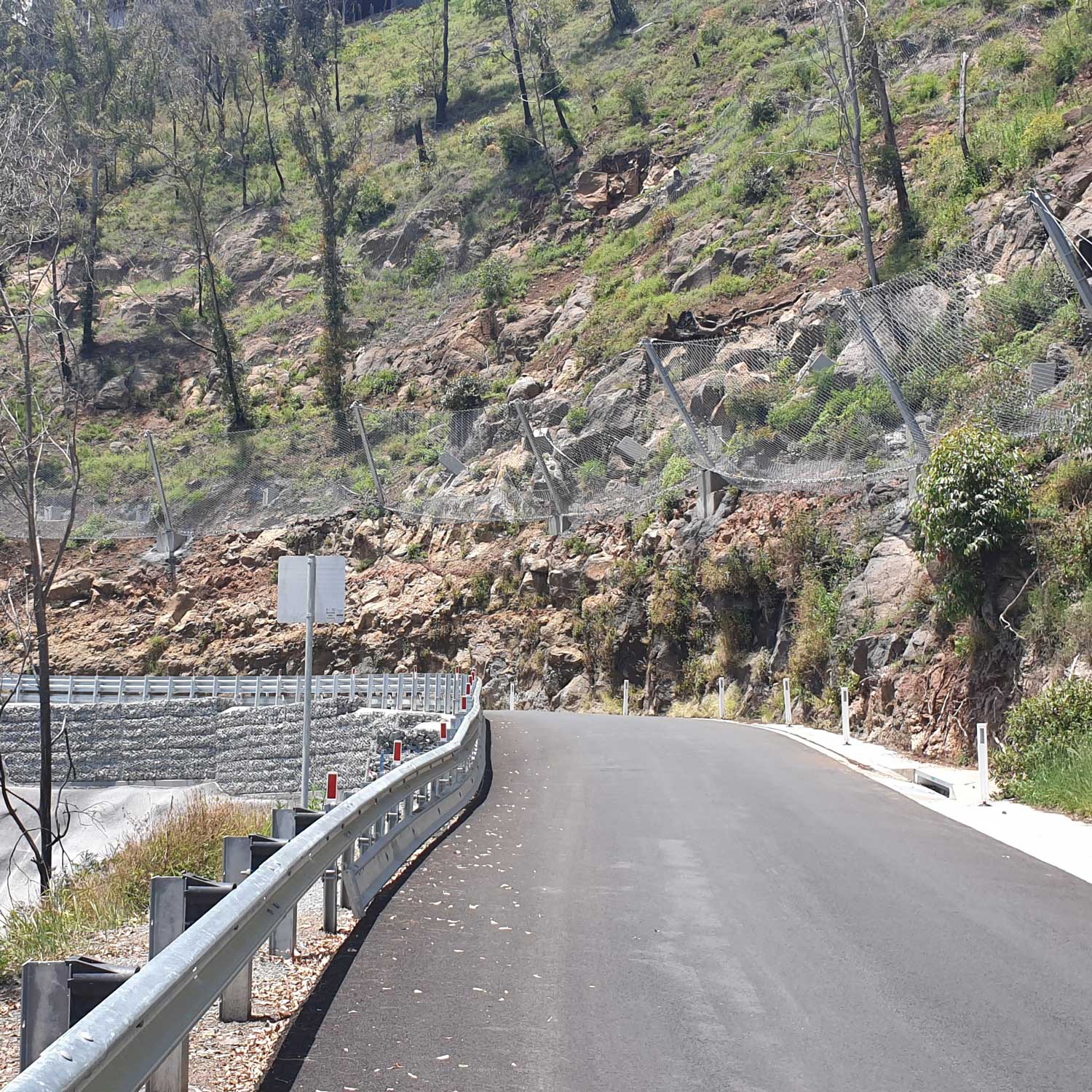
The remediation works were substantial. More than 5.7 kilometres of slope-stabilising anchors, 2,450 tonnes of concrete and 77,500 litres of concrete grout were installed to reinforce the road, supported by drape mesh, rockfall catch fences, gabion baskets, and soil nails to manage ongoing instability. Earthworks and drainage systems were rebuilt to manage rainfall and runoff, while abseiling crews equipped with drilling rigs accessed cliffside areas too steep for conventional machinery. These solutions were designed to not only repair the damage but to minimise the impacts of future bushfires, heavy rainfall, and strong wind events that commonly follow fire disasters.
Following it’s reopening, the Binna Burra Road project has been recognised with two industry honours—the Queensland Major Contractors Association (QMCA) 2021 Project of the Year (under $100 million) and Consult Australia’s 2021 Collaboration for Project Excellence. Its delivery offers valuable lessons for future disaster recovery efforts, demonstrating the positive impact of early collaboration between project partners, the effectiveness of adaptable delivery models that allow design and construction to progress in parallel, and the critical role of engineering in both immediate recovery and long‑term performance.
Bridges, unlike the enclosed conditions of tunnels, are open-air structures exposed directly to hazards such as bushfires, vehicle collisions, and fuel spills. Because heat and flames can threaten the structure from all directions, bridge design prioritises strength and stability rather than containment and evacuation. This approach helps ensure that critical connections remain serviceable and resilient, even in extreme conditions.
Preserving the structural integrity of bridges during fire events requires a deep understanding of how fire affects different structural materials. Deterioration in key materials can compromise load-bearing elements, risking partial or total structural failure. In bridge fire events, temperatures can exceed 1,200°C. These extreme temperatures directly jeopardise the structural integrity of key bridge materials, triggering rapid degradation in their mechanical properties. Steel loses stiffness and strength rapidly beyond 600°C, while prestressing strands can suffer irreversible strength loss above 400°C. Although concrete generally offers robust fire resistance, it is still susceptible to internal cracking and surface spalling, especially when exposed to steep thermal gradients. Timber bridges are particularly vulnerable to fire, as evidenced by the loss of 18 timber bridges during the 2019–2020 Eurobodalla bushfires on the South Coast of New South Wales, Australia.
To address these vulnerabilities, performance-based fire design uses advanced thermal and structural modelling to simulate realistic fire scenarios. This modelling is essential for understanding how fire impacts a bridge’s structural systems, how heat propagates through various structural materials, and how geometry, restraint conditions, and load paths influence failure modes. These techniques are invaluable for evaluating the resilience of existing bridges, allowing for targeted interventions such as modular shielding for piers or additional concrete cover to address specific vulnerabilities and reduce fire risk without the need for a complete redesign.
Emerging trends, such as the increasing popularity of electric vehicles (EVs), are adding new complexity to bridge fire resilience. Fires involving EVs can reach higher temperatures, persist for longer durations, and may reignite due to thermal runaway. As EV adoption grows, bridge designers will need to update fire modelling and firefighting protocols to address the unique risks posed by battery fires and ensure that bridge assets remain protected well into the future.
In recent years, there has been a notable increase in bridge fire incidents, particularly as urban areas expand and infrastructure continues to age. Australia’s extensive stock of older bridges is particularly vulnerable to fire hazards and, like its ageing counterparts around the world, is an unavoidably costly and disruptive proposition to replace.
Despite this heightened risk, current fire design guidance for bridges remains less developed than that for buildings and tunnels.
Robust industry debate in Australia has focused on adopting a thoughtful, targeted approach to tackling risks associated with ageing bridge stock. SMEC’s Senior Bridge Engineers have played a leading role in these industry conversations, drawing on extensive technical knowledge, research, and hands-on experience with both local and international bridge fire design practices and standards.
These discussions suggest a practical pathway to improving fire resilience in bridge design, starting with a robust, risk-based framework to help prioritise interventions according to community risk. Rather than retrofitting every bridge, engineers can identify structures with elevated fire exposure based on factors such as traffic volume, proximity to bushland, or critical community function, and concentrate enhancement efforts where they are most needed.
Strengthening fire-related provisions within existing standards, alongside clear and practical guidelines for post-fire inspection and assessment, would further support these efforts. Collectively, these measures can improve the durability of bridge assets, better protect communities, and minimise the risk of major economic and operational disruption when fires occur.
While tailored to Australia’s regulatory environment and infrastructure conditions, the principles underpinning this approach have broader relevance and may serve as a foundation for similar enhancements in other countries facing comparable fire risks.