
Shinyanga Regional Airport Upgrade


From the early pioneers on the Snowy Mountains Hydroelectric Scheme, to our leaders and innovators of today, our people make us who we are.
Through our network of global specialists and by collaborating with local partners, we connect you with the best teams and capabilities to deliver highly innovative and sustainable solutions.
As an organisation we are continually evaluating ways we can better provide a safe, flexible, inclusive and respectful workplace for our people and clients.
People are at the heart of our organisation, we strive to create a flexible, diverse and inclusive environment that enables our people to thrive to their fullest potential.
Explore career opportunities

SMEC’s engineering team worked in close collaboration with the contractor to monitor daily progress, safeguard technical quality, and maintain project momentum. We applied best-in-class program management systems aligned with International Financial Institution (IFI) requirements, On site, engineers coordinated real-time technical reviews, addressed emerging design and construction challenges, and ensured that materials such as aggregates sourced from local quarries met the required standards.
A dedicated materials specialist provided quality oversight for long-lead imported components, including runway lighting systems and transformer units, helping to keep installation timelines on track. Civil, structural, MEP, and aviation engineers contributed hands-on expertise, troubleshooting on-site issues and reviewing shop drawings to ensure compliance with project specifications.
Surbana Jurong complemented SMEC’s efforts by providing architectural support during the construction phase. The team reviewed drawings and coordinated with the contractor to supply missing architectural details where needed. Services were delivered flexibly over a one-year period, blending on-site supervision with remote coordination to ensure construction aligned with the approved vision.
Environmental and social safeguards were integrated into SMEC’s supervision processes, with the team enforcing compliance with the Environmental and Social Management Plan (ESMP) and Health and Safety Management Plan (HSMP). This included spill prevention, drainage installation, and protection of sensitive areas, as well as liaison with local communities on land access and compensation. During the project duration over 150 toolbox sessions were conducted, alongside PPE distribution, HIV awareness training, and gender-based violence prevention initiatives.
SMEC’s supervision approach focused on proactive coordination and practical problem-solving. From sequencing site activities to managing supply chain constraints, the team ensured that construction remained on track and up to standard.
A quality-first mindset underpinned every phase of delivery. Daily inspections and detailed monthly reporting enabled early issue resolution, risk mitigation, and continuous alignment with international aviation standards. By maintaining close oversight of shop drawings and technical submittals—such as revised drainage designs, power distribution layouts, and AGL cable plans—SMEC helped streamline decision-making and minimise delays.
Importantly, a carefully staged construction strategy enabled limited emergency landings to continue during the works, preserving critical regional aviation services and reinforcing SMEC’s commitment to adaptive, functional delivery.
The project also delivered meaningful economic participation. With over 240 jobs created and 95% of the workforce sourced locally, SMEC’s involvement supported national capacity building, skills development, and on-site safety.
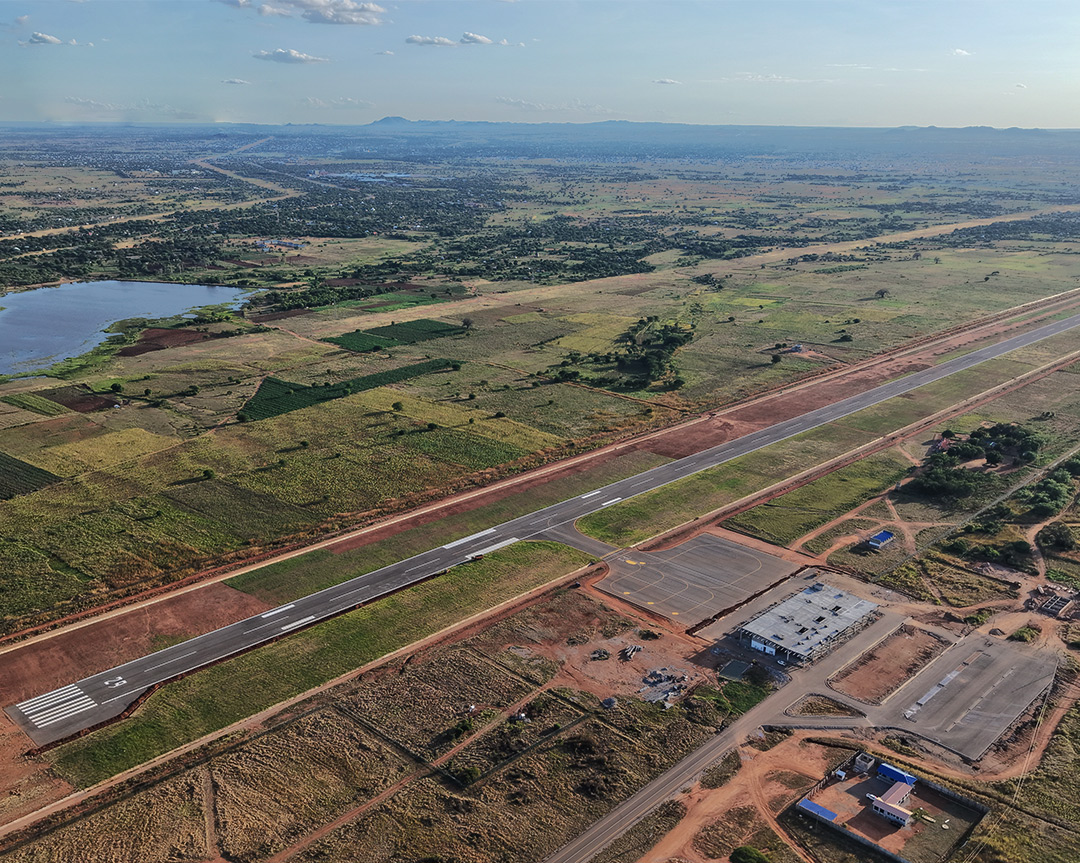
The upgraded Shinyanga Regional Airport represents a transformative investment in northern Tanzania’s future, strengthening mobility, enabling trade, and supporting vital services.
By enhancing domestic air access and expanding infrastructure, the facility will act as a regional gateway for flights and government operations. It will support growth in agriculture, tourism, logistics, and mining, while improving access to healthcare and emergency response.
The terminal is designed to handle 100 peak-hour passengers and up to 115,000 annually by 2035, with scalable facilities that can grow with demand. The 2,200-metre asphalt runway, upgraded from gravel, ensures safe, all-weather operations and accommodates larger aircraft.